
Introduction
Pornography is nothing new, but it has never in history been so widespread. The term pornography does not even fit today’s standards, nor does the term obscenity for that matter. That term has been changed so much over the years in the American legal system it has become hard to define and almost obscure. Looking back in history, we can see that sex has always been alluring as depicted in visual representations and the written word.
Ancient visual representations of sex acts can be found in carved stone in the temples in India dating as far back as c.950-970. In Japan, as early as the 17th century, pictures with sexual acts were mainstreamed to provide sex education for physicians, courtesans, and married couples. In the Tokugawa period (1607-1867) color woodblocks were developed, allowing for mass printing. By the 18th century the government had to slow the production by placing edicts and prosecuting offenders[1].
The written word brings us poetry in ancient Rome such as Ovid’s “Ars amatoria”, (Art of Love), or some of the works of medieval Italian poet Giovanni Boccaccio, such as “Decameron”[2]. Or we can move forward to the 19th century and study many works of literature such as, “Hagar Revelly” (1913),) “Odyssey”, (1933), and “Memoirs of a Woman of Pleasure” (1966), which all ended up in court being debated as to their acceptance in the public sphere[3].
Fast forwarding to the 21st century we see visual and written representations all around us: the grocery store, the television, the movies, even driving down the street. The public square has been flooded with pornography as we know it; from Playboy, Hustler, Penthouse, Cosmopolitan, and even Sports Illustrated magazines; from erotic novels to Bondage and Sadomasochism (BSDM) in 50 Shades of Grey; from music videos, to VHS films, to pay preview movies in hotel rooms; from advertising of clothing lines like Calvin Klein and Victoria’s Secret to adult novelty shops on billboards , and maybe even in “so called” wardrobe blunders at the Super Bowl.
Soft core pornography is creeping into our mainstream and influencing the minds of our youth, while hard core pornography is degrading the minds of adults and children as well. Predators are seeking to normalize sex as a commodity and gain profits by grabbing the attention of men and women from every socio-economic background and make them long term consumers in an industry that harms children, promotes violence, destroys relationships and families, and tears at the fiber of faith and community. It also promotes prostitution.
When talking about prostitution, we usually separate it from the term pornography. However, why is the filming of sex acts for money not considered prostitution? Why is it legal? Do we clarify that distinction to our barely legal teenagers who are being inundated with visual and written cues that pornography might be a lucrative and glamourous career move? We warn them about the dangers of drugs and alcohol, but how much do they know about sex trafficking rings being run in middle and high schools, the rape culture on college campuses, the public health crisis that is being caused by STD’s in the porn industry or loss of brain function due to addiction to pornography?
In America, sex is not just a fascination, it is a fixation and, in many cases, an abomination. Children are being tortured and filmed for sexual purposes as early as infancy. Revenge porn is the new way to get back after a breakup. Campus rapes have increased. Violent sex is becoming mainstreamed. Fathers are abandoning their families and losing their jobs. Media and entertainment is becoming sex education with an agenda. Human rights and ethical issues are being ignored. And finally, moral and spiritual tapestries that have been woven together for centuries are becoming frayed at the edges or literally torn apart. And all of this because a fascination became a fixation. The following excerpt is written by a man who wrote articles for Playboy and understands the impact it has had on our society.
“The first decade or two of Playboy contained a protracted monthly essay by Mr. Hefner in which he tirelessly deplored, assailed, and mocked traditional moral views involving licit and illicit sex. One of those articles proclaims, ‘The American experiment is working out just fine. American’s are free to speak, to write, to think, and to act as they choose. That’s what the American experiment is all about.’ But you see, the American experiment is not working out just peachy-keen. The current issue of Newsweek magazine announces that by the end of the decade as many as one-half of the children of America will be raised by single parents. Between 1970 and 1980, illegitimate births in the white community rose from 6 to 11 percent, and in the black community, from 38 to 55 percent. Because they all read Playboy! Of course not. But it is unquestionably the case that self-indulgence has a great deal to do with the fragility of personal relations; wanton sex, like wanton booze or wanton idleness or wanton thought, breed undesirable things, among them bastards, but also broken homes. And broken homes breed things like violence, neglected children, and drug addiction, the stigmata of modern America. Most emphatically not what the American Experiment is All About[4].
But there is hope. What if we take a fresh look at sexuality. Most of us have heard about the “sexual revolution” of the 1960’s, maybe it’s time for a new revolution. A revolution to bring back some of the purity to America. I am not talking about a movement of abstinence, although that may be a fringe benefit. I am talking about stripping away all the images, icons, ideologies, and media- based education, and allowing ourselves to discover the pure joy of the gift of sex in its’ proper place; in intimate private relationships that are designed uniquely and without judgement. No more frequency expectations, no more notches on the belt, no more financial gain. What if the conversation stopped being, how much can we talk about sex and changed to; What is the best way to talk about sex?
Could we bring sex back to being about love. Not, “Love the one you’re with”, that’s not love. Love is commitment, sacrifice and loyalty. Not hook ups for fun. That kind of fun eventually ends in heartache, disease and even death. What if we just put sex on a shelf and let it simmer for a while and focus our energy on developing our gifts and talents as individuals, learning to be true to ourselves while having interdependent relationships with others based on mutual respect and dignity, and working toward fulfilling our God given destinies.
The sexual revolution of the 60’s was fueled by ideologies of men with an agenda, such as Alfred Kinsey, so called “father of the sexual revolution” and Hugh Hefner, Kinsey’s so called, “pamphleteer”[5]. Both men are dead now, but their legacy lives on, even though Kinsey has been proven to be a fraudulent scientist and even considered by some as a psychopath[6], and Hefner was basically just a dirty old man surrounded by money hungry women in his old age. The agenda they started in the early 50’s has seeped its’ way into our society, bought perversity and promiscuity to new levels, and to this day poses as the norm.
It is time to take a hard and real look at what pornography has done to American society and decide if this is what, “We the People” want. The government can enforce laws, but only we can stop the supply and demand.
This book is a plea to every consumer of pornography to recognize that there is a real person behind every image. She could be your daughter. He could be your son. They are not objects to be used and thrown away. Get help if you need to, but please stop the demand.
It is also a warning to every young adult who may be considering entering the porn industry. Please look at what you are getting into before you take that leap, then share the information with your loved ones to keep them safe. No matter what anyone tells you, there is no amount of money that will ever be enough for you to recover from the damage you will do to your body and soul. To all of those who have suffered from making the choice to be in the industry or were taken there by force, there is healing and hope, as well as forgiveness for those who have driven the demand.
Lastly, I hope this book will open new conversations about sexuality in America. How can we fix what we’ve done, and where do we go from here? With the right resources, maybe more studies can be done to get a better understanding of how the media has affected our views on sexuality in America. Maybe with an open mind, free from the distractions of the other voices of mass culture, we can hear our own inner voices once again and decide individually and then collectively what we truly stand for as a nation.
“Men are largely interdependent, and no man’s activity is so completely private as never to obstruct the lives of others in any way. ‘Freedom for the pike is death for the minnows’; the liberty of some must depend on the restraint of others”…To avoid glaring inequality or widespread misery I am ready to sacrifice some, or all, of my freedom: I may do so willingly and freely; but it is freedom that I am giving up for the sake of justice or equality or the love of my fellow men”[7].
1st Reason, CHILDREN ARE BEING HARMED BY IT.
Sex sells. Or is it being sold to us? Are predatory market practices (PMP) being broadcast through the mainstream to promote a pornified culture and infiltrate the minds of our youth while priming some to become long term customers and causing a market driven demand while dangling carrots of wealth and fame at others to fill a supply?
Pornography is proven to be addictive and traps young minds, damaging them extensively. “In a sample of 30 juveniles who had committed sex offenses, exposure to pornographic material at a young age was common. The researchers reported that 29 of the 30 juveniles had been exposed to X-rated magazines or video; the average age at exposure was about 7.5 years”[8]. “Research has also found that sexually reactive behaviors were most apt to be displayed not by children who had been sexually abused but by those who had been exposed to pornography”[9]. “Pornography is greatly influencing American youth. The largest users of porn are the age groups of 12 to 17…Porn producers are targeting adolescents…Porn is the new rock and roll”[10].
If the players in and around the pornography industry are purposely aiming their targets at children who are not aware of the harms that may be caused to them because they are too young to understand the consequences of opening doors beyond their maturity level, or too uninformed to know that pornography is not sex education, if they are grooming them to become long term consumers; then these businesses are engaging in predatory practices.
Children are a vulnerable population and must be protected not only from the horrors of physical slavery in sex trafficking, but also from bondage bought on by hedonistic predators who are promoting the consumption of unhealthy products and attempting to normalize sex as a commodity, not only driving the demand but attempting to fill the supply with young adults who have been deceived into believing that pornography is a viable career choice.
Where Did the Boundaries Go?
The FCC was founded to protect the public from being flooded with obscenity. The Communications Act of 1934 was enacted by Congress to regulate communications inside the United States as public convenience, interest or necessity requires[11]. In the past 45 years, and especially the last three decades, the boundaries have been pushed way beyond the limits. Individual freedoms are seeking to eliminate societal boundaries, and this is dangerous. In “Notes on Mass Culture” (1948), Irving Howe was concerned about the consequences that certain comics were “little more than schematized abstractions of violence and sadism and push children into premature adulthood”[12]. His concerns were not unfounded as we can see a progression of predatory marketing in the media since then.
“Scores of online pornographers have embedded the names of popular children’s toys in their websites so that Internet users are directed to their site when searching for toys. Most children have encountered online porn and one in five has been sexually propositioned by adults or other children forwarding porn to them. Some children’s websites are besieged by pop-up ads for adult sites. It is not uncommon for “children’s” video games to feature pimps, prostitutes and full nudity factor”[13].
Popular video games allow full frontal nudity, portray sex scenes, and even mimic the violence in porn films[14]. One scene in Heavy Rain entitled “Sleepless Night” features nudity and comes just shy of rape. The narrative could be a duplicate of a porn film except for the unrealistic escape. A God of War, Chains of Olympus sex scene entitled, “Two girls and a Spartan”, depicts a threesome, as two naked girls frolic in bed before the Spartan comes in and takes control. “Let’s Play Dukem Nukem” likes to visit strip clubs and kill the strippers. Grand Theft Auto has many nudity scenes in its’ series. And finally #1 is God of Sparta which sports a full brothel with many naked women luring in their potential prey. These are all rated 17+, but there are other less explicit scenes in 14+ that build the appetite for more, and common sense would tell us that the 17+, barely legal games are getting into the hands of younger children.
The music industry released a video that glamorizes pornography and prostitution and mainstreamed it, knowing that any child can come across it [15]. Ice T’s song “Pimp Anthem” glorifies pimping women, is full of profanity, and gives instructions on how to be a pimp. Afroman’s song entitled “Colt 45” turns the tables by making the man the harlot. The lead singer brags about prostituting himself with various types of women including those from many different ethnic backgrounds, while sex-based profanity and lewd language is relentless throughout the whole tune.
Network television series with a parental rating of TV 14 are named by Cosmopolitan Magazine’s, “10 Hottest Sex Scenes on TV” list for 2015[16]. Do we not have a problem? Listed as #9 is the series, “How to get away with murder”, The author of the articles writes, “A groundbreaking show, but a particular accomplishment was the extra jolt of sexual energy it injected into Thursday night’s line up on ABC”. The scene this article portrays is of two homosexual men, one who is HIV positive. It claims to be a positive move toward promoting this kind of relationship with so called, “safe sex”. The Fox series, “Empire” makes #3 on the list when there is an unexpected hook up with one of the show’s main stars, J Poppa, and a buxom woman named Becky. The author states that this scene demonstrates how “hot” body positive sex scenes are and how we need more on television. Number one on this list is Hannibal for another homosexual scene with two women. It is described as sensual, explicit and artistically hot.
“Watching sex on TV predicts and may hasten adolescent sexual initiation. A diet of TV high in sexual content was strongly related to initiation of intercourse and advancement of non-coital activity levels in the following year. Watching the highest levels of sexual content effectively doubled the next-year likelihood of initiating intercourse”[17].
Are fourteen-year-old children mentally prepared for this kind of so called “entertainment”? Or is there an agenda behind this that is taking away our children’s innocence. Interestingly, one gay lawyer thinks so. He makes a valid, though somewhat contradictory statement as he voices his opinion on Disney’s new direction in his commentary in the Orlando Sentinel entitled, “Gay attorney to Disney: Mature ‘Beauty and the Beast’ robs kids’ innocence”,
“As a proud member of the LGBT community, I smile when shows I watch — such as “NCIS New Orleans” and “How to Get Away With Murder” — include LGBT characters. But I am an adult, and “How to Get Away With Murder (TV 14)” is light years away from “Stars vs. the Forces of Evil… Somewhere along the line, Disney went off course. No longer did it see itself as a defender of children’s innocence. Instead, it saw itself as a conduit to social change. Walt Disney became Harvey Milk… Prime-time network television is geared for an adult audience; one that understands the world we live in. Adults have long lost their innocence, whether it be sex drugs or violence, many of us have had our eyes open to the hardships of the world. We lost our innocence when we grew out of adolescence, but do we really want our kids to lose theirs in adolescence”[18].
The rest of Cosmopolitan’s top 10 list include TV MA ratings, and soft porn is the norm. It is very likely that a percentage of those fourteen-year-old children who have been primed will continue to feed their hearts and minds with what the industry produces. One of those TV MA rated programs, Showtime’s “Shameless” pulls at the heartstrings of young viewers by showing the plight of neglected children being raised by an alcoholic father yet exploits them at the same time by following them in their sexual escapades and basically making some of them soft porn stars by showing the world the graphic details.
“To children, pornography is instructional in that it provides a visual message about new information. However, that information is not an accurate portrayal of human sexuality. Photographs, videos, magazines, and virtual games which portray rape and the dehumanization of females in sexual scenes are powerful forms of sex education. Unlike learning provided in an educational setting, exposure to pornography is counterproductive to the goal of healthy and appropriate sexual development in children. It teaches without supervision or guidance, inundating children’s minds with graphic messages about their bodies, their own sexuality, and those of adults and children around them”[19].
Damaging the Adolescent Brain
There are various studies that confirm the fact that the brain is vulnerable during childhood and adolescence. An article written by Jay Giedd in Scientific American entitled, “The Amazing Teenage Brain” is based on many studies he has done in his role as Director of Child and Adolescent Psychiatry at University of California, San Diego and his career as Child and Adolescent Psychiatrist.
“The exuberant growth during the pre-puberty years gives the brain enormous potential. The capacity to be skilled in many different areas is building up during those times. … But the pruning-down phase is perhaps even more interesting, because our leading hypothesis for that is the ‘use it or lose it’ principle. Those cells and connections that are used will survive and flourish. Those cells and connections that are not used will wither and die. So if a teen is doing music or sports or academics, those are the cells and connections that will be hard-wired. If they’re lying on the couch or playing video games or MTV, those are the cells and connections that are going [to] survive”[20].
Studies also show a clear case for addiction. “The teen brain’s reward center has a response two to four times more powerful than an adult brain’s, which means teen brains release higher levels of dopamine in response to natural rewards”[21]. “The adolescent brain prunes back neural circuitry by adulthood to make responses more efficient. This process makes it more difficult for them to choose things other than the patterns they’ve set when they reach full adulthood”[22]. “Researchers believe that pornography’s intense stimulation of the brain brings about significant changes to the brain similar to drug addiction”[23]. “Teens are at a great risk of developing a pornography addiction as their brains are still developing[24]”.
“The immature brain is more vulnerable to addictions of many types. Many pornography addicts speak of becoming addicted during their adolescence. Developing intimacy skills is an important part of adolescent male psycho-sexual development, as it is in this way that sex and love are brought together, allowing successful and satisfying adult relationships. Pornography, however, is about emotional distance, self-gratification often at the expense of another’s pain, and objectification — polar opposites of what a teenage boy needs most to learn. Pornography has the power to leave a young man without the most essential tools he needs to achieve emotional and sexual maturity”[25].
Coming in Through the Back Door
All of this subtle preparation is priming young minds and increasing demand, which will inevitably lead to increased sex trafficking and greater danger to our children. It will also lead to a desensitizing of sex and morality, leading more of our young women and men to see pornography as a lucrative career choice, without truly understanding the consequences of their choices.
The pornography industry has a high demand and it is inconceivable to believe that a continuous supply will be available without grooming the minds of future generations to accept the commodification of sex as just another business with people as its’ product. As one porn producer put it, “The next generation of porn consumers and producers alike may break with that puritan mind-set. The teenagers who grew up with cable and the VCR ”’come to the table already saturated with sex,” says Bryn Pryor. ”They’ve never known a time without Calvin Klein ads and MTV. By the time they see porn, they’ve already seen so many naked people they’re pre-jaded[26]. This is the subtle coercion that is taking place through advertising and the entertainment industry. Maybe it is time to coerce them back to truth that will set them free.
“The perils of using organic metaphors to justify the coercion of some men by others in order to raise them to a ‘higher’ level of freedom have often been pointed out. But what gives such plausibility as it has to this kind of language is that we recognize that it is possible, and at times justifiable, to coerce men in the name of some goal (let us say, justice or public health) which they would, if they were more enlightened, themselves pursue, but do not, because they are blind or ignorant or corrupt. … It is one thing to say that I may be coerced for my own good, which I am too blind to see: this may, on occasion, be for my benefit; indeed it may enlarge the scope of my liberty.. Children, although they are coerced, are not slaves, because they obey orders given in their own interests, and that the subject of a true commonwealth is no slave, because the common interests must include his own”[27].
Sex Trafficking and Pornography
“Children are not a separate group, but in a phase of life thru which every single human has to pass. Is therefore not justice to a particular distinct portion of humanity but justice to all”[28].
Education is one of the keys to protecting our children and future generations. It is a weapon that can be used to help slow the demand and awaken offenders to see pornography for what it truly is. In this book I will revisit the history of the phenomenon of pornography in America, list the devastating affects it is having in many areas of life, and seek to find ways to use the obscenity clause as a way to bring honesty and sensibility to legislation, protect the safety to women, children, and other disenfranchised victims and offer education and awareness to the users, and finally, to break its’ power over the masses.
There is a definite link between pornography and child sex trafficking. Here are just a few statistics:
“Laura Lederer, former Senior Advisor on Trafficking in Persons at the State Department, spoke on this topic at a briefing for members of Congress in their staff on June 15, 2010. She summarized the “numerous links between sex trafficking and pornography” this way: some types of pornography actually are sex trafficking because they involve force, fraud, or coercion; some perpetrators are trafficking or exploiting women and record the acts they perform; pornography “is used in sex trafficking and the sex industry to train women and children what to do”; pornography provides rationalizations for exploiters”[29].
“Child pornography can be used by exploiters to lower children’s inhibitions in order to seduce or encourage them to freely participate either in prostitution or pornography. Pedophiles and child abusers also use pornography to legitimize their actions and to convince themselves that their behavior is not abnormal but is shared by others. Child porn can also be used as a medium of exchange with other exploiters in public and private sex markets. Sexually explicit images of children may be used to blackmail child victims into obedience or silence. There is evidence that child porn is being used as an active tool by homosexuals for the recruitment of young boys”[30].
“Interviews with child pornography consumers have suggested some offenders move through a variety of pornographies, each time accessing more extreme material”[31] as a result of desensitization or appetite satiation, which led to collecting and discovering other forms of deviant pornography”[32].
“Child pornography offences have exploded by more than 200 per cent in the last decade, a trend that advocates say is fueled by the easy spread of illicit material over the internet. Incidents of child pornography climbed for the eighth year in a row in 2016. The agency recorded 6,245 incidents last year, up from 4,380 in 2015. That represents a more than 40 per cent rate increase in just one year, and a 233 percent spike from the rate reported in 2006”[33].
“Users of pornography were more likely to engage in illegal behavior. Those who used pornography were more likely to go to prostitutes and engage in domestic violence, stranger rape, date rape and incest. These behaviors should not be surprising since pornographic videos containing all of these themes are readily available”[34].
Part 2: Finding Solutions: Tearing up the Roots, Dismantling the Power
Some of the roots of the pornography can be traced back to the so-called, “sexual revolution”, and two men. The first, a narcissistic activist and scientist who distorted truth and got away with it for many years, has since been exposed as a fraud and called a psychopath, yet strangely is still honored by some for his work known as, “The Kinsey Reports”. Alfred Kinsey had a large part in changing the sexual mores of American society because of the respect he gained in the scientific community for his corrupted and deceptive scientific data.
Chapter Five of his famous book, “Sexual Behavior of the Human Male”[35], which was released in 1953 and embraced for its’ liberal stance on sexuality, describes the abuse of children for scientific research in horrifying detail, yet for years no one paid any attention to this chapter as he traveled the world proclaiming himself as a sex expert. The following words are taken directly from a pedophiles diary who abused 317-1000 children. Kinsey never reported this abuse, instead he used it and protected it in the name of science. The pedophile describes what he believed to be orgasm in children after adult stimulation, “Extreme tension with convulsions often involving sudden heaving and jerking of the whole body; groaning, sobbing, or more violent cries, sometimes with an abundance of tears especially among young children”[36].
According to Kinseys’s collegues at Indiana University, Kinsey’s attitude toward doing scientific research on children was that it was necessary and good and that ignorance about childhood sexual behavior was more of a crime than pedophilia was. He felt that children needed to be guided in their sexuality by adult stimulation and that it was only a paranoid generation that would hold back a child from experiencing orgasm from the age of infancy. This attitude probably stemmed from growing up in a repressive puritanical household where sex was considered “dirty”. His colleagues felt that his anger toward his childhood fueled his desire to do any, and all kinds of research and experimentation[37].
Judith Reisner PhD, attorney and historian, also a staunch critic of Kinsey’s work played a large part in unraveling the deception in his so-called science. Fortunately, his work is no longer as credible as it once was, although his Alma Mata, Indiana University still celebrates it and defends his unscrupulous data as confidential. Judith Reisman summarizes some of the inside information on Kinsey and his research team from a book written by Indiana University scholar and Kinsey Institute grantee, James H. Jones[38], “Kinsey only hired sexual deviants on whom he could rely to keep his secrets-including his fraud, his uncommon desires, and the child molesters he used to conduct child sex experiments. Jones also reported that Kinsey coerced his wife into participating in acts of adultery and sodomy with his staff and co-authors (which were filmed), seduced male student at Indiana University and bullied their wives into participating”.
“Suppressing, falsifying, or inventing findings to reach a researcher’s or audience’s needs constitutes scientific misconduct”[39]. Astoundingly, Kinsey’s work still affects small segments of society, groups who promote liberal sex education, condone experimentation and even use pornography as a teaching tool. “Kinsey was the most often cited sex expert in the Science Citation Index and the Social Science Citation Index (as of 1997). He was cited more often and more favorably than Maslow, Freud, Mead, Tofler, Paiget or Skinner [40]. His work influenced American Universities where some of his disciples, some being members of pedophilia societies, taught from his perspective and used pornography as mandated course work. Some students from California State University, Northridge (CSUN) and the Institute for the Advanced Study of human sexuality in San Francisco have engaged in public speaking and even appeared as expert witnesses in court cases defending crimes against women and children citing Kinsey’s work[41].
From Science to The Market
The second man is, Hugh Hefner of Playboy Enterprises, brilliant marketeer, and protégé of Alfred Kinsey, who referred to Kinsey as the “father of the sexual revolution” and appointed himself to market his ideas. He once stated, “If Kinsey was the researcher, I became his pamphleteer” [42].’Hard to think of anything that’s any more important than to change the social sexual values of our time. And that is what I take great pride in”[43].
In 2000 Playboy magazine filed a lawsuit challenging the Telecommunications Act of 1996 which states all channels that provide primarily sexual orientated programming be scrambled between the hours of 10 pm and 5am[44]. This was to protect children from unknowingly coming across it. The court ruled for Playboy saying that cable channels are not subject to the same laws as regular programming and that there were other ways that were less restrictive to protect children, like individual responsibility between the customer and cable provider[45]. Hefner even went as far as to set up a foundation to further the cause of releasing obscenity into the public square under the guise of free speech. “The primary purpose of the foundation is to support organizations that advocate for and defend civil rights and civil liberties with special emphasis on First amendment rights and “rational” sex and drug policies”[46].
Soft Core to Hard Core
“The very notion that a Playmate image, this innocent erotic image, should be perceived as somehow harassment or poor taste is a bizarre attitude, and the fact that such attitudes are embraced by any portion of the thinking part of society, should be an embarrassment… I don’t know that it is possible to ever imagine Playboy magazine to be more relevant than it was in the 50’s and 60’s when it literally changed the sexual climate of the country and of the world[47]”.
I know that some factions of society like to try and keep morality out of obscenity, but the above statement clearly shows how influential actors have an agenda that is bigger than economic gain or bringing pleasure to the consumer. The success of Playboy led to other magazines which became more hardcore and offensive. Larry Flynt of Hustler was known to push the envelope and fight for First Amendment Rights to bypass the obscenity clause also. He is known to be unscrupulous, serving six months jail time for desecration of the US flag and showing complete disrespect for appointed court officials[48]. In another case he was given a sentence of 7 to 25 years in prison on obscenity and organized crime charges, yet he served only six days in jail. “the sentence was overturned on appeal following allegations of prosecutorial misconduct, as well as judicial and jury bias”[49].Finally, in April 1998, Flynt was charged with a number of obscenity-related offenses concerning the sale of sex videos to a youth in a Cincinnati adult store he owned. In a plea agreement in 1999, LFP, Inc. (Flynt’s corporate holdings group) pleaded guilty to two counts of pandering obscenity and agreed to stop selling adult videos in Cincinnati”[50]. He has also offered money several times to dig up dirt on Republican candidates and government representatives.
Narcissistic Activists
Narcissists are like parasites, and parasites require hosts. Parasites suck the life out of the host with an insatiable hunger that is all consuming, unless they are detected and removed. What if a narcissist becomes an activist for a cause? A narcissistic activist would require multiple hosts, in order to continue to feed. A much larger path of devastation would be left along the way.
These types of narcissists are not liberals or conservatives, they are people with hardened hearts and roots of bitterness who are driven by ideological rationalizations that they must penetrate into society in order to ease the burdens in their own souls. “Kinsey expressed hope that his research would spare young people in the future the same kind of, as he saw it, pointless and really crippling guilt that he had experienced as a youth”[51]. Hefner worried that masculinity was in crisis and feared the “womanization” of America, calling his own mother a prude[52].
One person might release a form of activism by using law as a tool for control, enforcing constraints that do not allow for freedom of moral stance; while another might manifest his activism in a deceptive way as to seem as though he/she is allowing for a moral stance, but truly trying to enforce relativism for his/her own benefit. Narcissistic activists lead in causes that make them comfortable in their own skin and sympathetic toward others like them. Rejection fuels their lust for approval and they may appear to have good intentions, yet secretly (maybe even to themselves) are addicted to the hosts and seek self-satisfaction over anything else[53]. Narcissists do not bond, instead they attach. If the host seeks to bond, the narcissist repels and moves to another host who is open to attachment in the moment and a shallow connection[54].
”Those who fear censorship of pornography conjure up the slippery slope argument that if we give in to this we will have to lose our other freedoms.. The liberals from a hedonistic utilitarian point view that censorship harms our way of life. Further to them, the harm is not really that clear and well defined based on scientific research”[55].
Narcissistic leaders can blind the eyes of their prey. What if that prey is an entire society? Relativism cannot be enforced. Relativism says that everyone has a right to their own way of living, there is no right or wrong, and some supporters of relativism believe that everyone should agree on that. That is contradictory because every person has an individual sense of right and wrong based on various factors including upbringing, societal culture, temperament and many other influences. Therefore, each society must place some sort of boundaries to maintain a peaceful and productive place to live.
“Men are largely interdependent, and no man’s activity is so completely private as never to obstruct the lives of others in any way. ‘Freedom for the pike is death for the minnows’; the liberty of some must depend on the restraint of others”…To avoid glaring inequality or widespread misery I am ready to sacrifice some, or all, of my freedom: I may do so willingly and freely; but it is freedom that I am giving up for the sake of justice or equality or the love of my fellow men”[56].
A parasite needs an unaware victim who does not have the ability to remove it, nor does it understand it’s power. The utopian idea of a relativistic society is flawed because individual actions always affect others. Pure relativism in the sense of expecting others to allow one complete freedom to live one’s own way with no conflict would require isolation and ironically promotes separatism. If one so chooses to live that type of life, that is his or her choice, but it is not the role of society to make them comfortable. And when that way of living is pushed on others, it becomes unhealthy and even abusive. “It is not the role of society to make people feel included. The role of society is to maintain a modicum of peace between people”[57]. “If it is possible, as far as it depends on you, live at peace with everyone”[58](Romans 12:18, NIV).
Balancing Regulation with Freedom
Laws should only be made to force agreement in areas that are clearly detrimental to society. For instance, stop signs and red lights are essential to safe traffic flow. In a large society with many travelers a lack of traffic laws would cause major devastation. Even if people tried to avoid collisions, they would happen. There would also be mass confusion making it hard to be at peace and to be productive. Signs, lights, and other devices provide clear markings to enable people to make safe choices.
In America, the English language and the US Constitution were meant to provide clear language as to how to guide the laws of the nation. The first amendment allowed the freedom to have differences of opinions and the ability to share them, but it also had boundaries to ensure the safety of society. It was not a fully relativistic document. It protected the people against totalitarianism yet took authority over anarchy. It allowed for the democratic motto of “We the People”, but guarded against “I the ideology”. The English language also had boundaries which allowed laws to be written in a clear and concise manor that would not leave much room for interpretation. Relativistic society seeks to change the English Language to suit every individual’s desires instead of providing a safe place to find truth and consistency. Not only is this an impossible task, it is a sure road to anarchy.
It is my contention that justice and love should guide the authority of the first amendment and sex should not be a product to be consumed. A narcissistic movement may promote lifestyles that claim to be a shift for the bettering of humanity, yet they are experimental, not proven to be healthy. Some may call it evolution, but truly it is nothing new, it is just another wrapping on an old destructive philosophy. The hosts become the weak and disenfranchised in society, such as children, wounded, uneducated and poor people, as well as other victims of circumstance. The parasite attached to these people through propaganda and other hosts who have been infected by the parasite. The victims are unable to remove the parasite because of lack of knowledge, lack of healing, or lack of discernment.
The Power of Deception
“What is the most resilient parasite? A bacteria? A virus? An intestinal worm?
An idea. Resilient, highly contagious. Once an idea has taken hold of the brain it’s almost impossible to eradicate. An idea that is fully formed, fully understood. That sticks, right in there somewhere”[59].
The power of the parasite is distributed through many hosts and the synergy blinds the entire movement and demands all of the hosts attention and energy. The followers are brain washed into believing a lie and the infectious tide of the masses become hard to swim against. Pornography is an epidemic that has infected many and continues to grow at a rapid pace across the spectrum of social status, age, and ethnicity.
Irving Howe argued in, “Notes on Mass Culture”(1948), that mass culture was an agency of vast psychological control, “perpetuating passivity and shredding personality, it’s only aims being to provide relief from work monotony without making the return to work too unbearable, it must provide amusement without insight, pleasure without disturbance”[60].
Ironically an example of this became evident in another predatory marketing practice that devastated many people in America, the sub-prime mortgage crisis. While the watchdogs for American corporations were busy at play, the foxes got away!
“A report obtained by ABC News, says senior employees of the SEC spent hours on the commission’s computers looking at sites like naughty.com, skankwire, youporn, and others..This report found 31 serious offenders were senior officers with salaries ranging from $100,000 to $222,000 per year. Some of the offenses included one senior attorney spending up to eight hours a day watching porn, two SEC accountants attempting to access porn websites, one 1,800 times in a 2 week period, the other 16,000 times in a month, and other employees bypassing and deliberately disabling filters”[61] .
“Rep. Darrell Issa (R-Calif.), ranking Republican on the House Oversight and Government Reform Committee, said it was “nothing short of disturbing that high-ranking officials within the SEC were spending more time looking at pornography than taking action to help stave off the events that brought our nation’s economy to the brink of collapse…This stunning report should make everyone question the wisdom of moving forward with plans to give regulators like the SEC even more widespread authority[62]”.
Government Intervention
“The government is intended to be watchdog for the corporation. However, too much government stifles business and enforcement of laws is not always easily administered. “Law is forced to locate a victim, and also prove the victim has suffered harm before the state can intervene, yet it is impossible to take account the harm of pollution, the public atmosphere that is at stake, not just an individual made ill by the air that we all have no choice but to breathe”[63].
Although big government is not the answer, there are times when intervention is necessary to move the pendulum back in the right direction. The government has stepped in on more than one occasion. President Nixon took a stand during his term of office.
“Nixon went on the offensive soon after taking office, pressuring Congress to enact legislation that would stem the flow of “offensive sex materials,” prodding Attorney General John Mitchell to “seek strong measures to curb pornography,” and urging Postmaster General Winton Blount to “Put the Smut Merchants Out of Business…Nixon stated that,“So long as I am in the White House, there will be no relaxation of the effort to control and eliminate smut from our national life.”[64].
The Reagan Administration also acted by appointing a committee to do new research. Here is a statement from three of the appointed members of the Attorney General’s Commission on Pornography:
“We are three women, who have, in varied ways, devoted our lives to the welfare of children and families: one as a specialist in the treatment of those who sexually abuse women and children, another as a journalist covering the diverse issues facing contemporary American women and the third as a specialist in the prevention and treatment of child abuse, neglect and molestation. We share a deep concern about the effects of pornography on American women…We wish to express our strong personal objections to the offensive and totally inaccurate materials that portray women as eager victims of abuse or as beings of less competence or value to society than men. We disapprove equally of media depictions that discriminate unfairly against men, or against specific races, cultures or those with physical or mental disabilities…We abhor the exploitation of vulnerable people and condemn those who profit from it”[65].
It was during The Clinton Administration that pornographers saw an open door to spread the plague of pornography to an almost uncontrollable fire.
“The trade publication of the porn industry, Adult Video News, frequently praised the Clinton Justice Department for not enforcing federal obscenity laws. The March 2000 issue asked, “How likely is it, would you say, that we are going to enjoy the same benevolent neglect that the industry has enjoyed under Janet Reno? Regardless of who is elected, our fortunes are going to change”[66].
Larry Flynt and his followers, saw the Clinton Administration as a brief open window that it was important to go through with a “Carpe Diem” attitude. Mark Croner, Ivy league graduate and director of the Hustler series, Jail Babes, which played on the idea that porn consumers would love the mixture of illegal behavior and illicit sex, made this statement. “The Clinton Administration opened up an era of “Blue skies, green lights, and fat bank accounts for the pornography industry”[67].
During Obama’s reign as president he signed the H.R. 159 which clarified any child under 18 who was subjected to sex trafficking, a victim and H.R. 285 which clarifies that punishment also extends to those who advertise children for sex, but he failed to continue the fight against pornography. “As great as these bills are, however, they fail to properly address the most important part of sex trafficking: reducing demand before men use, abuse, and torture women, girls and boys for sadistic personal pleasure. And according to one of the nation’s leading academics studying the effect of pornography — a self-described “radical feminist” — pornography is a key ingredient in that demand[68]”.
In July of 2016, Donald Trump signed a pledge drafted by activist group, “Enough is enough, “In signing, the group says Trump promised to steer more resources toward prosecutions and to appoint an attorney general who would make enforcement of federal obscenity laws – along with laws against child abuse and child pornography – “a top priority”[69].
It specifically addresses obscenity laws and possible societal harms, and it mainly focuses on child exploitation. President and CEO of the group Donna Rice Hughes is hopeful for change. Ms. Hughes understands the problem with pornography and business ethics and sees Donald Trump as a strong opponent, “The pornographers have been laughing their way to the bank for years,” Hughes says. “They’re huge and it’s getting worse. … What you need is someone who’s strong and is going to put their foot down”[70].
I will continue to clarify the government’s role in obscenity in the latter part of Chapter Two as we explore how pornography promotes prostitution and objectification. Theories that endorse the legalization of prostitution, sex as a commodity or sex as a viable career choice have not been prominent in American government or American business ethics. The FCC was founded to protect children and a large segment of the population from becoming contaminated with theories that are attached to agendas promoted by a small segment of society. The first amendment has an obscenity clause that has been vigorously debated but does require that community standards are adhered to. Although the lines for community standards are blurry, all legislation has paid special attention to protecting children.
2.) Second Reason, IT PROMOTES PROSTITUTION.
Pornographic films are no different than prostitution, it is sex for money. The fact that it is legal is a contradiction. The fact that an eighteen-year-old who is not even allowed to drink legally can partake in pornographic films is even more baffling. Cable is one of the main providers of pornographic films and broadcast television has been pushing the limits further and further without much intervention from the FCC . In a documentary entitled, “American Porn”, a producer for Hustler Magazine shares how his marketing tactic of using 18-year-old girls in his video series entitled, “Barely Legal” catapulted his business into a huge success[71]. Since that time the industry has grown exponentially, and child pornography is becoming more of a problem with children as early as the age of infancy being raped and tortured and even being sold by parents to try to appease a Guttman like progression of depravity that comes with pornographic addiction[72]. Child pornography, of course is an illegal underground business, but it started with someone having the mindset of, “The younger, the better”, as is the concept of “Barely Legal”!
In America prostitution is a moral issue and has not been known to be an acceptable means of income for women, or a legal service for men. However, when America started allowing pornographic films, which are a form of prostitution, to become a part of everyday life for many addicted consumers, and also allowed rap artists to glamorize pimping out women under the guise of free speech, we crossed over the boundaries of the obscenity clause in our constitution and started the snowball effect that is coming down hard, with violence against women and children increasing dramatically.
“There has been a 774% increase in the number of child pornography images and videos reviewed through the National Center for Missing and Exploited Children’s Child Victim Identification Program”[73].
“With this growth in the pornography industry, the demand for fresh merchandise has outstripped the supply, leading pornographers to turn to sex trafficking in order to have an ample supply of women and girls for their online and video materials”[74].
This demand for child pornography is being manifested in the most grotesque ways imaginable and children are being groomed and targeted for sex trafficking. We can turn a blind eye to the recent headlines or we can stand up and say, “Enough is enough”. We may not have the answers, but we cannot deny that the evil has increased and part of it is due to an unfettered use of obscenity.
“A Texas man was sentenced to four consecutive life sentences for raping a 3-month-old baby girl and filming it… Police say Akins filmed himself raping the 3-month-old and took photos of himself sexually assaulting her for her entire first year of life”[75].
“A Pasco County assistant principal was charged with possession, production and distribution of child pornography, amid allegations that he took sexually explicit photos of a 14-year-old boy and sent them to another man”[76].
“Ten (twenty-two) years ago, before we had public access to the Internet so readily, parents were sexually abusing their children, but they weren’t taking videotapes and making pictures and putting them on the Internet. Now that’s what we’re beginning to see, which means that they see their children not only as their victims, but as a commodity for money, to the public, those who are like-minded and would like to have access to their children, in that sense. So I see the commodification of children as a bigger problem in our society and the fact that we fail to see them as individuals who will be highly harmed by knowing that their images are on the Internet”[77].
Freedom Youth Project, an organization that fights against child sex trafficking through research, believes that “pornography is a leading cause of human trafficking for minors in the United States”[78].
A recent study in San Diego schools found astounding evidence of gangs targeting and recruiting students for sex trafficking in middle and high school.
“There is almost a disbelief that this is really happening in our high schools,” Stephan said. “These are kids, and they are trying to keep it a secret. It is upon us adults to recognize it and stop it because this is really happening.”
A three-year study by the University of San Diego and Point Loma Nazarene University released in 2015 found that 8,830 to 11,773 victims — mostly underage girls — are trafficked in San Diego County each year. Some of the girls are from the region, others are brought here from other parts of the state. Largely operated by gangs, the industry is estimated to have generated $810 million in 2013, researchers found.
In 20 San Diego County high schools that participated in the study, all confirmed that recruitment was happening with their students. Of those schools, 18 of them reported documented cases of sex trafficking victimization. About 140 staff members from the 20 high schools identified 81 reported victims along with an additional 54 suspected victims over five years. They also identified 17 recruiters targeting their campuses”[79].
These abusers may be victims themselves to the power of pornography or the horror of child sexual abuse. Their minds have been altered, their hearts have grown cold and their actions are brought on by addiction that feeds on progressive perversity. On the other hand, they may just be capitalists trying to make money on the latest illegal trend of activity. Either way our country’s children are at risk.
I believe that the heartbeat of America is love, family, and community; and sex is a sacred part of that mix, meant to be treated with respect and dignity, not as a commodity and not to be used as a coercive tool for self-gratification. I think most Americans would agree that our children need to be protected, nurtured and given the chance for meaningful and fulfilling relationships and careers. We cannot allow our nation to bow down to the god of consumerism while sacrificing the very fiber of our being.
Predatory Webs
Sex Factor, a reality show that plays off the ideas of shows like American Idol and X-Factor tried to sell its’ wares to cable networks. It has not yet been accepted by any but was available as a series on the internet. Judges on the show place themselves on a pedestal and imitate the likes of other reality star judges. Mostly former porn stars, they know their business and feel they are offering the contestants a privilege to be mentored by them. Auditioning for this show means performing sex acts. Becoming a contestant means continuing to perform more sex acts with various people with no compensation. One contestant shares her narrative about how she is supporting family members through her work, making it seem like a viable job option while emphasizing her charitable deeds. She says it’s easy and lucrative[80].
The judges and the contestant on the Sex Factor who claimed she needed a way to pay back her student loans, along with the Duke University student who made headlines for being vocal about her participation in the industry for the same reason and had a movie produced about her story[81], are all creating a predatory web by offering a so called “easy” solution to solve financial problems and enticing naïve and uniformed young women to do something that will affect them the rest of their lives. It is the responsibility of the government to protect children and young adults from being pulled into these webs of deception. When they fail to act, society suffers.
Pornography has become a predatory web that has been weaved into American society, against the will of many adults and children. It would probably be impossible to eradicate, but it can at the very least be put back in a more discrete place. The internet needs more filters, social media needs to be responsible, so called “adult entertainment” needs to be out of harm’s reach and parents need to pay attention to what their children are doing. Finally, the business community should lead in an effort to educate and end (PMP) aimed at children and adolescents.
“The predatory web is formed of five essential structural components: 1) a predator; 2) a prey; 3) a tool; 4) a loss or some form of harm to the prey, and 5) an unpleasant surprise. It is activated through five chronological strategic steps: 1) identifying the prey’s weaknesses; 2) baiting; 3) forcing decision; 4) trapping; and 5) rendering the prey completely inoffensive… Predators and preys each address fear in a different way. Predators take a step back, analyze, devise their Five-step plan of attack, and proceed. Prey are impulsive, naive, and quite willing to remain blind for as long as this feeds their dreams of wealth”[82].
I am writing this book after hitting a roadblock with my dissertation committee while trying to obtain a Doctorate in Business Administration. The head of the department does not see this as a business issue, but more of a sociological, psychological, or public health issue, which it is too. However, although I understand his reluctance, we have already seen that this is an economic and marketing issue as well. I feel this can be used to educate future business leaders.
As we will see in further chapters there is plenty of opportunity for business ethics educators to use the pornography industry as an example of human rights violations due to the violence and unfair treatment in the industry, and product safety violations because they have made people a product to be used like a machine which is unnatural and unhealthy and is causing a public health crisis. Corporate Social Responsibility is another aspect of business that is important to explore. I will cover more of these areas in later chapters.
The Marketing of Pornography
“Pornography, created by novices and without scripts, in homes, was typically sold for $250-$2,000 to any of 100 U.S. companies providing minor editing, packaging and distribution services. Female victims spoke about coercion, abuse, rape, torture and battering in the production, along with fear and humiliation about the knowledge that people were buying videos of their abuse for pleasure and entertainment. These victims had no legal redress. Many women and children were photographed or videotaped by husbands, boyfriends or others without their consent or knowledge”[83] .
As I have stated, marketing, including, but not limited (PMP) could be a great topic of study and conversation. Marketing is about ideas. Ideas can become behaviors and cultural norms. If left unfiltered, unhealthy and harmful ideas can affect many generations. It is the responsibility of adults to protect the minds of children, and businesses to protect consumers. Marketing cannot be separated from ethical standards.
Preamble: The American Marketing Association commits itself to promoting the highest standard of professional ethical norms and values for its members (practitioners, academics and students). Norms are established standards of conduct that are expected and maintained by society and/or professional organizations. Values represent the collective conception of what communities find desirable, important and morally proper. Values also serve as the criteria for evaluating our own personal actions and the actions of others. As marketers, we recognize that we not only serve our organizations but also act as stewards of society in creating, facilitating and executing the transactions that are part of the greater economy. In this role, marketers are expected to embrace the highest professional ethical norms and the ethical values implied by our responsibility toward multiple stakeholders (e.g., customers, employees, investors, peers, channel members, regulators and the host community)[84].
Americans could bring hope to less developed countries if we held a higher ethical standard, but sadly we have become known as one of the top producers in the pornography industry and our youth are beginning to believe the lies that have been planted in their minds through PMP.
“Making ethical decisions about pornography means knowing where your porn comes from and the labor conditions under which it is made. If we are willing to be concerned about those issues when it comes to sneakers or food, then we need to transfer those concerns to the adult industry as well”[85].
The pornography industry and legalization of prostitution is a step backwards for America and if we don’t turn the tide, it will only further desensitize the hearts of our youth and lead them to desperation, callousness, hopelessness and despair. Predatory Marketing Practices and the unbridled use of obscenity have infiltrated America, luring young adults, and causing a boldness from corrupt business owners determined to change our country’s norms. Is this what we really want? Maybe we can learn something from other countries.
On a Global level: Comparing Cultural Ideologies
While youth in Thailand and India feel obligated to perform sex work in order to help their families survive financially, Japanese teenagers sell themselves in order to buy the most fashionable clothing in an effort to keep up with latest wave of commercialism[86]. Mindsets that are passed down through the generations become norms and children suffer.
Thailand Sex Tourism
Thailand boasts a strong sex tourism economy, using a disenfranchised group of poor citizens to fill the increase in demand that was catapulted by the American military, “Rest and Recreation policies”[87]. Adding to a robust local trade, the American military initiated a practice for soldiers away from home, “U.S Secretary of Defense Robert S. McNamara negotiated an agreement with the government of Thailand that allowed American servicemen to enjoy “rest and recreation” in that country..the brothel industry that was built near the base at Pattaya Beach grew into and remains one of the East Asian sex industry’s main centers”[88]. Interestingly, McNamara is the same man who covered up the study he did on the Vietnam war and allowed the conflict to go on for way too long, allowing many of our men to be killed and maimed in battle.
Two governments coming together in what “they” decided was good for their country’s economic and social welfare affected generations of men and women alike and became part of what changed the moral compass of America. Sex became a commodity and people became pawns. In an academic paper entitled, “Sex Workers and Cultural Policy: Mapping the Issues and Actors in Thailand”, the author quotes several sources that explain the plight of Thailand’s women:[89]
“It is essential to look more carefully at sex workers (Thailand) themselves and why they enter the industry. Most of the women engaged in sex work are motivated by money and the concept of duty. Not all of these women face extreme economic hardship, but sex work can help increase the standard of living for themselves and their families. “Money was the motive, but workers saw it as their responsibility to provide that money to their families[90]. Parents have spent money bringing up the daughter, and it is often seen as her duty to repay the debt. Bishop and Robinson (1998) explain that the earnings of one daughter in Bangkok can support an entire family in the countryside, and many rural villages are made up of such families. As noted earlier, the impact of sex work on the Thai economy is significant and many Thais are economically dependent on the commercial sex industry”[91].
Japan
“In Japan sex and sexual relations are not always viewed as moral issues. Japanese have traditionally viewed sexual relations as a natural phenomenon, like eating, to be enjoyed in its’ proper place. Thus prostitution is widely accepted as a natural component and even a necessity in society…With very relaxed laws regarding children, it is legal for men to have sex with children as young as the age of twelve”[92].. However, in 1997 when the Japanese government became embarrassed by the teenage schoolgirls lining the streets prostituting themselves in order to earn money to buy Gucci purses and the latest fashions, they finally decided to make some changes and curb the obscenity. Although the legal age of consent was 13, prostitution among this age group was increasing and causing concern.
The latest craze in Japan, sex dolls, shows just how deceived and depraved a society can become when sex becomes a commodity. One man, a physiotherapist named Masayuki Ozaki who describes Japanese women as cold hearted and selfish, tells his story[93], “My wife was furious when I bought “Mayu” home. These days she puts up with it, reluctantly..When my daughter realized it wasn’t a big barbie doll she freaked out and said, gross, but now she is old enough to share clothes with Mayu..I want to be buried with her and take her to heaven”. Another man 62 year old married father of two, Senji Nakajima, says, “People always want something from you, like money or commitment, but my heart flutters when I come home to Saori..She never betrays me, she makes my heart melt away”[94]. Mr. Nakajimi swares he would never cheat on his “doll” and says he has no need for a prostitute anymore. We could call that good news, the bad news is, these men have lost their minds enough to not understand that dolls are not shes’, they are its! The cost for this twisted pleasure, approximately $6000. US dollars.
Less developed countries such as India have passed similar mindsets as in Thailand through the generations, allowing young girls to be pushed into prostitution by their own families. Intergenerational prostitution in Calicut, India is so ingrained in the culture that mothers prepare their daughters as if it is an undeniable fate. Some even hold their daughters back from getting out, because they do not want to be abandoned themselves…It is a harsh environment for children growing up as they are forced to hide under the bed while mothers of sex work take 20 to 30 clients per day. Fortunately, there are agencies there trying to pull children out and give them a chance for restoration through education[95]. The widespread use of pornography in this country will only make things worse for them. “In India today, 1 in 5 teenagers watch porn before the age of 13. Violent 3-D animation sex video games are especially created for this young market. They start with a pop-up site in which a woman prompts the user to undress her. That act then leads to violent sex games[96].
I will conclude this section with a brief look at some other countries and how policies and cultural mindsets harm children, then return to America’s roots and consider the direction we should take.
“In December 2004, an Edmonton man who had sex with a 13-year-old autistic girl was sentenced to seven years in prison. Brian Scott Deck pleaded guilty to six counts, including sexual interference and luring a child on the internet[97]”.
“Canadian children were considered especially vulnerable to cross-border pedophiles because the age of consent for sexual activity in Canada is only 14 years of age, one of the lowest ages in the Western Hemisphere. There were more than 10 million Internet users in Canada, and 99 percent of children in Canada had access to the Internet. According to Microsoft Canada, 25 percent of the children with access to a computer had been approached by a stranger online. Fifteen percent of the children had actually met an Internet stranger without their parents’ knowledge; some of these children never returned to the homes again”[98].
The following excerpts are from the “Trafficking in Persons Report: Country Narratives[99]
In Afghanistan customs allow families to force men, women, and children to work as a means to pay off debt or to settle grievances, sometimes for multiple generations with children forced to work to pay off their parents’ debt. Some Afghan families knowingly sell their children into sex trafficking, including for bacha baazi—where men, including some government officials and security forces, use young boys for social and sexual entertainment (p.66)
In Antigua and Barbuda…There are anecdotal reports that children are subjected to sex trafficking, including by parents and caregivers. (p.74)
In China…Women and girls are kidnapped or recruited through marriage brokers and transported to China, where some are subjected to prostitution or forced labor (p.129-130).
In Columbia…Authorities reported high rates of children exploited in prostitution in areas with tourism and large extractive industries. Sex trafficking in mining areas sometimes involves organized criminal groups. Transgender Colombians and Colombian men in prostitution are vulnerable to sex trafficking within Colombia and in Europe. ..Colombian children and adults are exploited in forced begging in urban areas. Illegal armed groups forcibly recruit children to serve as combatants and informants, to cultivate illegal narcotics, or exploit them in sex trafficking. Colombia is a destination for foreign child sex tourists, primarily from North America and Europe (p. 132-133).
In Guatamela, women, girls, and boys are exploited in sex trafficking within the country and in Mexico, the United States, Belize, and other foreign countries. Foreign child sex tourists—predominantly from Canada, the United States, and Western Europe—and Guatemalan men exploit child sex trafficking victims. (p. 184)
In Hungary, vulnerable groups include Hungarians in extreme poverty, Roma, unaccompanied asylum-seekers, and homeless men. Hungarian women and children are subjected to sex trafficking within the country and abroad, mostly within Europe—with particularly high numbers in the Netherlands, Belgium, Germany, Austria, Switzerland, and the United Kingdom. Hungarians, particularly Romani women and girls from eastern Hungary and from state care institutions, are exploited in sex trafficking in large numbers in Belgium by Hungarians also of Romani origin. A large number of Hungarian child sex trafficking victims exploited within the country and abroad come from state-provided childcare institutions and correctional facilities, and traffickers recruit them upon leaving these institutes. Hungarian women lured into sham marriages to third-country nationals within Europe are reportedly subjected to forced prostitution[100].
In Iran, girls between the ages of 13 and 17 are targeted by traffickers for sale abroad; younger girls may be forced into domestic service until their traffickers consider them old enough to be subjected to child sex trafficking. An increase in the transport of girls from and through Iran en route to other Gulf States for sexual exploitation has been reported from 2009-2015; during the reporting period, Iranian trafficking networks subjected Iranian girls to sex trafficking in brothels in the Iraqi Kurdistan Region. The media reported Kurdistan Regional Government officials were among the clients of these brothels. In Tehran, Tabriz, and Astara, the number of teenage girls exploited in sex trafficking continues to increase. Organized criminal groups kidnap or purchase and force Iranian and immigrant children to work as beggars and street vendors in cities, including Tehran. These children, who may be as young as 3, are coerced through physical and sexual abuse and drug addiction; reportedly many are purchased for as little as $150[101].
Families in some countries fear extreme poverty or other consequences because they were trained to do so through the generations, therefore they see no other option but to sell their children. They form tight webs of codependency in an effort to protect their children, when sadly they are harming them. American young adults are beginning to believe the lie that there is no way to pay their debts or find work that will sustain them, so they think a little pornography will make their lives easier. As Luke ford, gossip columnist for the adult entertainment industry callously puts it, “They come into this industry, because this is the single easiest way that they can earn $1,000 in a day, in two hours,” says Ford. “It’s not like we’re losing people from going to medical school or business school or becoming lawyers… Most girls who enter this industry do one video and quit. The experience is so painful, horrifying, embarrassing, humiliating for them that they never do it again[102]”
America is a young country. Maybe it is time we make known what we stand for. Surely, we can all agree that all this deception is harming children, increasing demand, and priming the next generation to continue or begin a worst cycle.
The first time I heard a 22-year-old single mother of two contemplate doing a porn film, “like Kim Kardashian”, she said; she was trying to figure out how she could get to Fiji for a vacation. I was shocked and perplexed. This girl was raised by two parents, her a father was a successful doctor and she seemed to have an entitlement personality. Her parents were trying to help her become more responsible by not supporting her financially, although they helped with her children. I was sitting at a table with her at lunch at a temporary job and she began to ask other’s opinions on the subject. To my surprise, the woman who was our manager said, “Under the right circumstances I might”. I was appalled at her answer, especially in light of the fact that she was about fifteen years older than the young mother and was in a supervisory position over her.
After that, I worked in the public-school system for three years as a substitute teacher. I began to talk to the middle school and college girls about the subject and they too seemed intrigued by the prospects. All of this is and some personal issues with loved ones is what began my quest to help change the direction that America is headed and help “Make America Pure Again”!
Part 2: Finding solutions: Tearing Down the web, clearing the vision
“Prostitutes have been seen by commentators from St. Augustine to Parent-Duˆchatelet (physician and hygienist) as a seminal drain, carrying away men’s excess libido, so the femmes galantes (loose women), the mangeardes (women who ‘eat up’ men’s money), the female parasites’, the vamps who prey on men’s capital, are a drain on the economy of saving and productive investment”[103].
While defenders of prostitution such as philosopher Herbert Marcuse, and author of, “One-Dimensional Man: Studies in the Ideology of Advanced Industrial Society”(1964) portrays the prostitute in a much different light:
“A marginal figure who challenges the instrumental rationality of advanced industrial society, apparently by cheating its rules of investment and return, its imperatives of alienated labor, time, and sexuality. For Marcuse, the prostitute’s ‘avoidance’ of ‘work’, her refusal to support herself with wage-slavery, renders her a heroic figure with the same ‘power of negation’ as the work of art has in a ‘two-dimensional culture’’[104].
Philosophies help shape societies and there are always opposing views. Pornography has been paving the way in America to making prostitution a norm. Is that what we really want? If so, how will it affect our country’s future? Prostitution and obscenity have always been social, moral and economic issues.
“The currency of monetary tropes in medical explanations of sexual psychology can be traced back at least to the eighteenth century, when economic arguments increasingly competed with religious morality in stigmatizing practices such as masturbation and fornication, not just as vice or sin, but as the wasted expenditure of a precious energy-resource, vital to the economy of both the working body and the wealth of nations[105].”.
I had never really thought about this economic philosophy until I started studying pornography, but I think it is worth revisiting some of these ideas. We saw earlier how fashion played a part in Japan for young girls seeking a certain lifestyle and willing to sell their bodies for it. Remarkably, this same phenomenon was happening in Paris in the 1800’s, As Parent- Duchatelet explained:
“Vanity and the desire of dress, together with idleness, is a very active cause of prostitution, particularly at Paris; when the simplicity and a fortiori the shabbiness of clothing is considered truly as a reproach, is it astonishing that so many young girls are seduced, by a desire for dress which will elevate them from the position in which they are born, and which permits them to mingle with that class who have looked on them with contempt? Those who know to what extent the love of dress is carried among women, can easily appreciate the influence of this cause of prostitution at Paris”[106].
In the early 1990’s in America there was a fashion trend known as porno-chic or the happy hooker look which incorporated icons from pornographic films and magazines into clothing lines. Celebrities like Christine Aguilera and Brittany Spears then promoted the look in their videos and stage performances[107]. That trend may be gone, but celebrities are dressing more and more scantily and acting more and more sexual, influencing young girls with low self-esteem who look up to them as role models. The pornographers know this as testified in this quote by Paul Fishbein, founder of Adult Video News, ”Lots of girls in this business — and guys, too — are dysfunctional. The girls get here at 18 and aren’t mature. They do it because they’re rebels or exhibitionists or need money. They think they’re making real movies and get really upset when they don’t win awards or get good reviews”[108].
On the other side of the coin is “the wasted expenditure of a precious energy-resource, vital to the economy of both the working body and the wealth of nations”. We saw earlier in Chapter one how workers in the SEC were wasting all of their energy watching pornography instead of protecting our economy. We also saw how adolescents gain brain performance by participating in healthy activities such as sports and music and lose it by doing sedentary and compulsive activities like gaming, watching television, and pornography. We have probably all known at least one person who wasted all of his/her energy feeding some sort of addiction. We have all heard the term “raging hormones” and assimilated it to sexuality. We have been told that there are only two ways to deal with it, suppress it or release it. But where did those ideas come from, and are they the truth?
What if we took the focus off sexuality in our country and put it on making our world a better place, fulfilling our God given purposes, and using our energy to create and innovate. What if sex became a much smaller part of public conversation and was given a chance to be something private and unique to each individual and family? What if we cleansed our minds of all the images, distortions, and agendas and looked for something pure and natural again?
Sex Education in America
As I stated earlier, I believe education is one of the keys to change, and deeper conversations will help us decide first individually, then collectively, where we can find some common denominators that make sense. Let’s start by looking at two diametrically opposed views about sex education. The first view comes from a very informational and well written academic paper that explores sexuality as pedagogy from the Victorian period into the 21st century. This paragraph sums up the author’s view on the direction this country should take.
“We need to take seriously the pedagogic function of sexual representations in the media; but rather than respond with revulsion and fear, we need to accept, and even embrace media sex as an opportunity for kids to gain sexual knowledge that schools, and parents rarely provide. The role of parents and educators in this sexual pedagogy should not be censors, but docents and mentors”[109].
The second view from The Holy Bible, does not specifically mention sex but is a general instruction for child rearing and would adopt sexuality from a biblical standpoint to be part.
“Train up a child in the way he should go [teaching him to seek God’s wisdom and will for his abilities and talents], even when he is old he will not depart from it. (Proverbs 22:6) You shall love the Lord your God with all your heart and mind and with all your soul and with all your strength [your entire being]. These words, which I am commanding you today, shall be [written] on your heart and mind. You shall teach them diligently to your children [impressing God’s precepts on their minds and penetrating their hearts with His truths] and shall speak of them when you sit in your house and when you walk on the road and when you lie down and when you get up (Deuteronomy 6:6-8)[110].
Whatever your faith, it is clear to see that the latter view is about teaching through relationship and example and is the responsibility of the parent for the sake of all generations. As a Christian my belief is that God’s Word is the way, and sexuality is a sacred and protected area of life. But even for those with different beliefs, we can all agree that parents have wisdom from experience and are perfectly capable of guiding their children. That is not always the case, but for the most part, unless the parent is deranged or abusive, it seems it would be better for a parent to teach the child, than the media teaching the child. In fact, allowing the media to teach the child might be called neglect.
Who is the media? Do we personally know these people? We have already seen how science, which is supposed to be more factual and proven, cannot be totally trusted and how pedophiles, psychopaths, and profiteers can creep into our homes and schools. So why would we trust strangers, who may have an agenda, to teach our children? And why would we leave them to figure it out themselves? None of those ideas seem to make much sense.
A Brief History on American Ideologies on Sexuality
In the Victorian Era (1837-1901) the ideology toward sexuality in America was on the completely opposite side of the pendulum than it is today. Although people of this era have been stereotyped as prudish and hypocritical, they also had some well-balanced, common sense ideas about sex and were very concerned about protecting the youth. In Rachel Gurstein’s book, “The Repeal to Reticence”, she compares what she calls the party of reticence to the party of exposure. The main idea for the party of reticence was not about shaming for the sake of condemnation as Alfred Kinsey and Hugh Hefner believed, it was far more tender than that. As one author of Letters of James Russell Lowell (1894) so beautifully describes the sentiment, “Portions of every man’s life are essentially private, and knowledge of them belongs by right only to those intimates who he himself may see fit to trust with his confidence”[111]. Gurstein continues this argument by expounding on Norton’s writing by saying, “Norton’s writing underlines a crucial component of reticent sensibility in that personal affairs, because they can only be made intelligible by the tender understanding of a trusted intimate, must be protected from the unsympathetic gaze of strangers lest they become slight or ridiculous”[112].
Compare this type of ideology with the cheap portrayal of sex in pornography and one can see how they are worlds apart. Norton could foresee where exposure could go and tried to avoid it at all costs, “Vulgar curiosity is indeed always alert to spy into these sanctities of private life”[113]. That does not sound like a prude, it sounds like a man who knows how to guard his tender heart and the heart of those close to him.
The party of exposure, as Gurnstein coined the term, were those who began the fight for greater freedom in the area of sexuality. They used literature and the press to make their voices heard and may have they led the way for the so called “sexual revolution” of the 60’s and the predatory marketing practices of today’s media.
“The sex radicals insisted on speaking plainly, not only about sexual morality, hygiene, and contraception, but also about sexual misconduct as well, claiming a higher purity than puritanism…Advocates of exposure justified their probing by claiming that publicity and openness were best suited to a democracy; they tirelessly evoked the “public’s right to know”, and argued that the exposition and depiction of vice have the salutary effect of a warning to evildoers”[114].
As we can see neither the party of reticence, with what some viewed as the “conspiracy of silence”, nor the party of exposure with its’, “tell all” philosophy, had all the answers. However, as we have witnessed in recent current events, both had points to be considered. Some things do not need to be exposed to the public because it takes away the sacredness, the mystery, and the magic of pure intimacy, but we also cannot sweep evil under the rug and act as if it normal. Current events can attest to that fact.
In the case of the Turpin family[115], there was a conspiracy of silence. This family learned that intimacy meant pain, torture, and bondage and the parents had covered it up with precision. Although there were warning signs from onlookers, they chose not to get involved with private matters inside a family. On the other hand, the school shooter, Nicholas Cruz, had been exposing himself loudly for quite some time and no one was doing much about it[116]. The Las Vegas shooter, Stephen Paddock[117] kept himself isolated with limited social interaction but was hiding some pretty horrible secrets. In a strange and ironic way, Paddock’s “conspiracy of silence”, having an attraction to child pornography, was also an example of how “seeing the truth about everything” can be downright evil. Maybe when a person gets this depraved, he no longer has much control over his senses because they have been completely given over to an evil force.
Is it possible that all of the desensitization over the years has caused the human heart to grow cold? The following pages will display the legal history that defines obscenity in America. It is complicated. However, when we peel the layers and look at it through a timeline, it is clear to see how ideologies have changed its’ meaning and made it somewhat obscure. Maybe through a deeper understanding, American will take a fresh look at obscenity and decide if this is what they really want to release into the next generations.
From a legal perspective, the following charts will offer some insight as to “how” and “why” the term obscenity has changed. The progression from the 1800’s to the present day clearly shows how judges interpretations can change languages and lean toward opposite sides of the pendulum. We start our journey by looking at some quotes from the judges involved in the early decisions (1800’s) and contrasting them with more contemporary voices.
The first two quotes are from Rachelle Gurnstien’s studies from various references. She does not say specifically who the judges in these quotes were, but provides insight as to their philosophies. “It does not require an expert in art or literature to determine whether a picture is obscene or whether printed words are offensive to decency or good morals”[118]. “The case is one that addresses itself to good judgement, common sense, and knowledge of human nature, and the weaknesses of human nature”[119].
The following are direct quotes from later cases:
From Judge Pound in (People v. Wendling, 1932) “One may call a spade a spade without offending decency although modesty may be shocked…although the play lacked taste and refinement, the coarse realism was its’ dramatic affect”[120]. In (Roth v. US, 1957) Justice Brennan distinguished between sex and obscenity and defined prurient interest. “Itching; longing; uneasy with desire or longing; of persons, having itching, morbid, or lascivious longings; of desire, curiosity, or propensity, lewd.” … “a shameful or morbid interest in nudity, sex, or excretion”[121].
The most current definition of obscenity comes from (Miller v. CA, 1973). “Chief Justice Warren Burger laid out the new, three-part test: The basic guidelines for the trier of fact must be: (a) whether the average person applying contemporary community standards would find that the work, taken as a whole, appeals to the prurient interest; (b) whether the work depicts or describes, in a patently offensive way, sexual conduct specifically defined by the applicable state law; and (c) whether the work, taken as a whole, lacks serious literary, artistic, political, or scientific value[122]”.
As you can see the new definition of obscenity leaves a lot of room for confusion and debate. For instance: What does “average” person mean? What are community standards? Who is the community? Who decides whether the work, taken as a whole, lacks serious literary, artistic, political, or scientific value? Can the courts take on such a task? Summarizing some of the most important cases from then to now, we can see just how complicated it can become.
Dates Court Case Ruling
1886-1933[123], 1957-1973[124], 1978[125],1982-1996[126]
| 1868 | Regina v. Hicklin
Hicklin Test |
Obscenity was defined under the test of “whether the tendency of the matter charged as obscenity is to deprive and corrupt those who’s minds are open to such influences, and into who’s hands a publication of this sort may fall”(p.182). |
| 1873 | Comstock Act
Federal Statute passed that banned 5 kinds of materials from public mails |
1.) obscene, lewd, lascivious printed material of indecent character 2.) info or devices relating to birth control 3.) things intended or adapted for immoral use or nature 4.) any info regarding how to obtain the material above 5.) envelopes or post cards with indecent epithets (p.182) |
| 1879 | United States v. Bennett
|
Judge Blatchford rejected free speech as a defense on the basis that the law does not undertake to regulate the dissemination of obscene matter, but the mails of the US shall not be devoted to this purpose. “Free lovers and free thinkers may have a right to their views and may express them and even publish them, but they cannot not distribute through the mail (P. 183). |
| 1884 | People v. Muller | Judge Philips distinguished between art featuring nudity on one hand and blatant obscenity on the other. He proposed a test of motives to determine whether it is naturally calculated to excite in a spectator “impure imaginations” (p.185). |
| 1889 | United States v. Clark | Judge Thayer attempted to refine the Hicklin test by specifying whos’ morals should be protected. He distinguished between two classes of people 1.) “the intelligent and mature” 2.) the young and immature the ignorant, and those that are sensually inclined and likely to be influenced (p.186). |
| 1891 | United States v. Harmon | Judge Philips rejected free speech as a defense stating, “Liberty by all its forms and assertions in this country is regulated by law. It is not an unbridled license. Where vituperation and licentiousness begin, the liberty of press ends”(p.184). |
| 1913 | United States v. Kennerly
|
Judge Hand further distinguished potential victims based on the Hicklin Test of the most susceptible person. He introduced a relativist tone by saying that the words obscene, lewd, and lascivious have to catch up with the times and take on a more modern tone. In his words, “the present critical point in the compromise between candor and shame at which the community may have arrived here and now”(p.186-7). |
| 1924 | People v. Seltzer | Judge Wagner ruled against Seltzer on the grounds that he saw a split between style and content as an invitation to corruption stating, “Neither literary artistry, nor charm, nor grace of exquisite composition may cloak protectively those obnoxious impulses..which on patent appearance would be abhored”(p. 204) |
| 1929 | People v. Friede | City Magistrate Bushel expanded on Judge Hand’s interpretation of the victim stating that they could also be “those of mature age and high intellectual development and professional attainment (p.191). |
| 1930 | United States v. Dennett | The scope of obscenity law was considerably narrowed. Judge Hand found Dennett’s pamphlet not obscene on the grounds that its “high minded” style tends to “rationalize and dignify such emotions rather than to arouse lust”(p.191). |
| 1930 | People v. Pesky
|
The book, “Hands Around” was found obscene according to the Hicklin test. The judge suggested that “obscenity must be judged my normal people and “the literati” were the abnormal people who claimed that anyone who differs with their method of living and writing is puritanical and because of this attitude, to them, clean thinking or living is puritanical (p.194). |
| 1931 | United States v. One Obscene Book Entitled“Married Love” | Judge Woolsey states that the book “pleads with husbands for a better understanding of the physical and emotional side of sex and has no lascivious intent” He then determined that by replacing the person most liable to be corrupted with “any person with a normal mind”, the book would be helpful to married couples. In his closing statement he promoted frank discussion of sex and insinuated that all persons of sensibility would agree with his decisions unless they were tabooed by earlier ideologies, probably referring to those of the party of reticence (p.192). |
| 1932 | People v. Wendling | Judge Pound found the play not to be obscene because of its realism. “One may call a spade a spade without offending decency although modesty may be shocked” He said that although the play lacked taste and refinement, the coarse realism was it’s dramatic affect (reality shows). This broke another boundary in that was deeply imbedded in the 19th century that considered the “coarsening and vulgarizing of young people as part of the same continuum as the corruption of individual morality and the pollution of public space” (p. ). |
| 1933 | People v. Viking Press | Viking Press insisted that high literary merit distinguished it from obscenity and used the opinions of 40 leading writers and critics to substantiate their claim. Magistrate Greenspan broke the precedent of not allowing expert opinion and ruled in favor of the publisher. He added another phrase to the question of the supposed victim, “If the courts were to exclude books merely because they might incite lust in disordered minds, the books shelves would be barren”. This was a direct rebuttal that public morals and decency took precedence over literary culture. John Sumner successor to the NY society for the suppression of vice, stated, “obscenity laws represent the whole people, not just the literati” (p.200). |
| 1933 | United States v. One Book Called Ulysses | Judge Woolsey rejected practically all the key components of the Hicklin test. He insisted that the authors intent as well as the effect of the book read in entirety be considered and did not believe it was written to exploit obscenity. He equated the “dirty words” with the realism of the characters. He stated, “the established reputation of the book in estimation of approved critics, if book is modern, and the verdict of the past, if book is ancient are persuasive evidence”, thus shifting the authority of the obscenity determinations away from the jury (the people) to the “experts”. “The acceptance of expert testimony virtually guaranteed the literary merit would nullify any libidinous effect since it could be proved the material was art”(p.208). |
| 1957 | Butler v. State of Michigan | This decision rebutted the The Hicklin Test that stated “any material that tended to deprave or corrupt those whose minds are open to such immoral influences, ” including children”. Judge Frankfurter argued that the restriction was too broad and held that the law violated the due process clause of the 14th Amendment because it “reduce[d] the adult population of Michigan to reading only what is fit for children. |
| 1957 | Roth v. United States | “The Court upheld publisher Samuel Roth’s conviction for mailing material that appealed to the “prurient interest.” The ruling established the proposition that obscene expression was not entitled to First Amendment protections” Justice Brennan distinguished between sex and obscenity and defined prurient interest. “Itching; longing; uneasy with desire or longing; of persons, having itching, morbid, or lascivious longings; of desire, curiosity, or propensity, lewd.” … “a shameful or morbid interest in nudity, sex, or excretion”. |
| 1964 | Jacobellis v. Ohio | Justice Brennan elaborated on the Roth judgement and argued that when considering obscenity, “community standards” were to be national, not local standards.” [T]he constitutional status of an allegedly obscene work must be determined on the basis of a national standard. It is, after all, a national Constitution we are expounding. “He felt that because the movie was favorable in other states it met the community standard and could not be considered obscene. “It had been “favorably reviewed in a number of national publications, although disparaged in others, and was rated by at least two critics of national stature among the best films of the year (who are these people, was that weighed?) Judge Stewart concurred the ruling by saying only hard core porn should be considered obscene. As far as describing exactly what that was he said, “I’ll know it when I see it”. |
| 1965 | Ginzburg v. United States | The advertising for the publications emphasized their sexual imagery, and included a guarantee of a full refund “if the book fails to reach you because of U.S. Post Office censorship interference. Ginzburg had purposefully marketed the materials as pornography. He sought to have them mailed with postmarks from towns with salacious names (Intercourse and Blue Ball, Penn., and Middlesex, N.J.).
The Supreme Court upheld Ginzburg’s conviction. Writing for the majority, Justice Brennan held that in a close case, evidence that a defendant deliberately represented the materials in question as appealing to customers’ erotic interest could support a finding that the materials are obscene. |
| 1966 | A Book named, “John Cleland’s Memoirs of a Woman of Pleasure”, Atty General of Com. Of Mass
The Roth-Memoirs Test |
The lower court found the book was obscene because “the “social importance” element of the Roth test did not require that a book “must be unqualifiedly worthless before it can be deemed obscene.” The U.S. Supreme Court reversed this decision, emphasizing that under Roth, material could not be deemed obscene unless it was “utterly without redeeming social value”: it must be established that (a) the dominant theme of the material taken as a whole appeals to a prurient interest in sex; (b) the material is patently offensive because it affronts contemporary community standards relating to the description or representation of sexual matters; and (c) the material is utterly without redeeming social value. Preceding this ruling the standard became known as the Roth-Memoirs test. |
| 1967 | Redrup v. New York | Three cases where state tried to prosecute citizens for buying pornographic material were all overturned by Supreme Court. Of the three judges, 2 agreed that state had no jurisdiction. The third however held to the opinion that a State’s power in this area is narrowly limited to a distinct and clearly identifiable class of material as stated in the Roth-memoirs test. |
| 1968 | Ginsberg v. State of N.Y. | Ginsberg established that a state can enact more stringent obscenity standards for the sale of sexually explicit material to children than to adults. Ginsberg challenged the law on the grounds that it created a more restrictive standard for children than for adults, thus violating minors’ First Amendment right to read. The statute was upheld. |
| 1969 | Stanley v. Georgia | In this case where materials were found in a persons home while investigating another crime, the Court held that a state cannot prohibit citizens from possessing obscene material for personal use. |
| 1973 | Miller v. CA | In this landmark case, a new definition of obscenity is established. “Chief Justice Warren Burger laid out the new, three-part test:
The basic guidelines for the trier of fact must be: (a) whether the average person applying contemporary community standards would find that the work, taken as a whole, appeals to the prurient interest; (b) whether the work depicts or describes, in a patently offensive way, sexual conduct specifically defined by the applicable state law; and (c) whether the work, taken as a whole, lacks serious literary, artistic, political, or scientific value”. He discarded the notion of “utterly without redeeming social value,” and replaced it with his final words in the phrase above. |
| 1978 |
FCC v. Pacifica Foundation, 438 U.S. 726 (1978)
|
The FCC found that certain words in the monologue depicted sexual and excretory activities in a particularly offensive manner, noted that they were broadcast in the early afternoon “when children are undoubtedly in the audience,” and concluded that the language as broadcast was indecent and prohibited by 1464. A three-judge panel of the Court of Appeals reversed. One judge claimed censorship or use of a rule that was overbroad. A 2nd judge concluded that 1464, construed narrowly as it has to be, covers only language that is obscene or otherwise unprotected by the First Amendment. The third judge, dissenting, concluded that the FCC had correctly condemned the daytime broadcast as indecent. |
| 1982 | NY v. Ferber | The Supreme Court held that child pornography was not entitled to First Amendment protection. States may enact regulation of child pornography that might be found unconstitutional under the Miller standard if applied to pornography involving adults. In cases involving children, a jury “need not find that the material appeals to the prurient interest of the average person; it is not required that sexual conduct portrayed be done so in a patently offensive manner; and the material at issue need not be considered as a whole”. |
| 1986 | Renton v. Playtime Theatres | In Renton, the Court solidified its position that although municipalities are barred by the First Amendment from banning adult theaters altogether, they may use zoning restrictions to restrict them to remote areas. Justice William Rehnquist delivered the opinion of the Court, which upheld a regulation of the city of Renton, Wash., prohibiting adult theaters from locating within 1,000 feet of any residential zone, single- or multiple-family dwelling, church, park, or school. |
| 1996 | Denver Communications v. FCC | The court struck down a provision permitting cable operators to ban indecent programming from public-access cable channels, such as those made available to community groups, but upheld a provision permitting operators to ban indecent programs from channels leased to commercial programmers. It also struck down a provision requiring cable operators who chose to allow indecent material to be broadcast on leased channels to segregate that material to a single channel, and to block that channel unless the cable subscriber requested to have it unblocked. |
| 1997 | Reno v. ACLU | Ruling: The CDA’s “indecent transmission” and “patently offensive display” provisions abridge “the freedom of speech” protected by the First Amendment. The court’s judgment enjoins the Government from enforcing § 223(a)(1)(B)’s prohibitions insofar as they relate to “indecent” communications, but expressly preserves the Government’s right to investigate and prosecute the obscenity or child pornography activities prohibited therein. The injunction against enforcement of § 223(d) is unqualified because that section contains no separate reference to obscenity or child pornography.[127] |
As you can see, obscenity has been a much debated and complicated issue. Many of the early cases involved literature, hence the term “literati” came to be. In the mid 1960’s, Maurice Girodias, publisher of the Olympia Press and promoter of so-called “high pornography”, considered pornography as art, mandating “the truth about life must be told”[128] no matter how indecent, unseemly, or ugly it is, and that artists as heroic seers and cultural outlaws deserve special dispensation from society.
“Writing dirty books was generally considered a professional exercise as well as a necessary participation, even an act of duty, in the fight against the Square World. What exactly the Square World was nobody could explain with any precision, but the notion was very strong and it was not the usual routine of the new generation picking a quarrel with the old, it was a much stronger and deeper protest. As Girodias boasted, “The colorful banner of pornography was as good as any other to rally the rebels: the more ludicrous the form of the revolt, the better it was, as the revolt would go against ordinary logic, ordinary good taste, restraint and current morals.”[129]
It is possible then that the revolt’s only true aim was shock value. In other words, they had an agenda! Many of the later court cases mentioned above were influenced by an article written by William B. Lockhart and Robert C. McClure entitled, “Literature, the Law of Obscenity, and the Constitution (1954)”[130] This was clear in Justice Douglas’s dissent to Judge Brennan’s ruling on the US v. Roth (1956) case. Justice Douglas referred to Lockhart and McClure as “two outstanding authorities on obscenity”[131]even though the work was clearly biased toward the exposure party. Justice Douglas did not agree with the idea of community standards because he connected “the community” to the party of reticence and felt that they would stagnate anything new through censorship therefore restricting future generations from growth. He was also not convinced that there was enough evidence to show that exposure to the evils of mankind was harmful to the public. He stated, “The absence of public information on the effect of obscene literature on human conduct should make us wary”[132].
Ironically, the party of exposure relied on The Kinsey Report as the greatest authority on sexual behavior. As one reformer put it, “The Kinsey report has done for sex what Columbus did for Geography”[133]. As we have learned, they were deceived. They became the hosts for the parasite and unknowingly spread the poison. It is clear to see that competing ideologies have been passed down and are at war. Instead of fighting each other, we might try using some common-sense boundaries to find solutions to our nation’s ills. It is usually the extremes that cause the most devastation.
Conclusion
Going back to the opening quote that stated the media should teach our children. Let us explore some other ideas the author of this very well written and researched paper has about what is wrong with the conservative view of sexuality.
“The ‘facts of life’ were fundamentally shaped by the Protestant, white, male, heterosexual, and middle-class values of those who created them at the turn of the twentieth century in the interest of protecting the young. Some of these ‘facts’ are: that the purpose of sex is biological reproduction, and thus heterosexual coitus is the ‘natural’ expression of sexual behavior; that pursuing sex for pleasure is potentially pathological; that healthy and ‘natural’sexual relations are monogamous; that males are ‘natural’ sexual aggressors, driven by a biological need for physical release; that females are ‘naturally’ passive, and submit to sex only for the sake of children and family; that adolescent sexual behavior is driven by ‘raging hormones’; that social progress depends on ‘judicious mating’; that ‘superior’ people are able to rationally suppress the sexual impulse; and that ‘inferior’ races, classes, and categories of people are controlled by their sexual desires …. In twentieth-century America, then, the birds and the bees provided a way to impart to the young a prophylactic knowledge that served both practical eugenics and the progressive cause by defining sexual behavior in terms of a social structure favoring men, marriage, and monogamy, and disfavoring miscegenation, class mixing, promiscuity, and homosexuality”[134].
The author has done his research and he clearly states his point of view, but there is always a slant on academic papers, “Good qualitative research contains comments by the researchers about how their interpretation of the findings is shaped by their backgrounds, such as their gender, culture, history, and socioeconomic background”[135] Until one does the research him/her self, and takes each one of the references and reads them thoroughly, he/she cannot come to the same conclusions as the author. However, many people just accept academic material as fact, partly because it is too much work to read all the references, and partly because it is easier to let someone else do the work. The fact is, science and academia do not have all the answers either.
Let us look at the above passage using some intellect, and some common sense. It is possible that protestant white men had a large part in forming the ideology of the 20th century view of sexuality, and some may even have had unhealthy prejudices, which is clearly evident in the eugenics movement. However, let us not throw out the baby with the bathwater and consider that some of their ideas could be considered factual.
For instance, “heterosexual coitus is the ‘natural’ expression of sexual behavior and pursuing sex for pleasure is potentially pathological and healthy and ‘natural’ sexual relations are monogamous”. By saying, “the natural expression of behavior”, they are clearly referring to the biology of the male and female reproductive system. It doesn’t take a rocket scientist (or a pornography video) to figure out what goes where and why. One could argue otherwise, but in simple terms, the bodies of the genders are designed in a very specific way for procreation. The fact that sex is pleasurable does not rebuke that fact that that pursuing sex for pleasure is also “potentially” pathological. That has clearly been proven to be true in pornography and other sex addictions. The third point of calling monogamous sexual relations ‘natural’ could also be argued by looking at the studies on the rise of STD’s when promiscuity is increased.
On the other hand, if the Victorians truly believed that “that males are ‘natural’ sexual aggressors, driven by a biological need for physical release; that females are ‘naturally’ passive, and submit to sex only for the sake of children and family; that adolescent sexual behavior is driven by ‘raging hormones”, one could argue those points as well. This statement disregards temperaments, stereotypes genders, and puts most everything in the physical, disregarding a holistic approach to sex. Another passage from the author’s paper clearly show his slant, or what might be considered bias.
“Due to a “morbid modesty” and Victorian prudery, children were learning that sex was dirty and shameful; but rather than repressing the sexual impulse, this shaped it into dirty and shameful sexual behavior. To be able to make the “intelligent choice” of sexual self-control, adolescents would need an education that “build[s]up from early childhood the attitudes, tastes, desires, ideals, and habits which make for sound character.” By presenting a biological and evolutionary (and inherently eugenic) model of sex that defined it in terms of strategic reproduction, scientific sex education would inculcate a healthy understanding of sex as natural, and foster sexual behavior oriented strictly toward a rational decision to procreate[136].
This author and every other author, artist, politician, judge, or common person has a perspective. All of their opinions count, but they cannot all be accommodated. Every nation has boundaries. Every nation has a moral code. Pulling the reigns on the pollution that is spreading through the media and entertainment can have a major impact on the future of America. It is up to “We the People” to make our voices known. Are we willing to decrease the demand and cut off the supply of pornography for the sake of society? Let us continue to explore some more common-sense reasons to reject pornography and decide for ourselves.
- Third reason, IT PROMOTES AND GLAMORIZES VIOLENCE
“The biggest sex educator of young men today is pornography, which is increasingly violent and dehumanizing, and it changes the way men view women”[137].
“One study showed the strong link between men’s viewing pornography and behavioral intent to commit sexual assault. Furthermore, when men view sadomasochistic and rape pornography, their danger to females increases concurrently. Using these two types of pornography makes men significantly more likely to report intent to rape, stronger beliefs in rape myths, a decreased willingness to intervene in a potential sexual assault, and a lower sense of efficacy about intervening in a potential sexual assault situation”[138].
If a woman from the early 1900’s tried to introduce a book such as, “50 Shades of Grey[139]”, she might have been put in a mental institution. Yet, in the past decade our culture has accepted BSDM (Bondage, Discipline, and Sadomasochism) as a behavior that is tolerable enough to mainstream into our theatres. The fact that violence is a part of a love story that ends in restoration makes it more beautiful to some people, yet it is far from realistic. Anyone who has ever dealt with abusive, addictive or obsessive behaviors knows that going down to the offender’s level in order to help them heal is the worst thing one can do.
If women are to be honest about this series, they would also admit that the real draw is an awakening of the libido thru fantasy, and an attitude that screams, “If they can do it, why can’t we”. The problem with this philosophy is that we do not need to add oversexualized women to the culture of oversexualized men. Since men are the main consumers of pornography, the industry has begun finding ways to create porn that will target women’s interests. “Female pornography consumers are a growing market and as such, new types of pornography have been created for the appeal of women[140]. One website boasts of pornography for the common house wife, “porn for the bride,” and “porn for the new mom”[141]. We need to put sex back in its’ proper place. If sex becomes all about selfish pleasure and gain, then we will become a nation of cold hearted, uncaring individuals with no greater purpose than to live and die.
In order to understand just how truly horrifying the pornography industry has become, I refer to a chapter in Pulitzer prize winning author Chris Hedges book, “Empire of Illusion”, and the chapter entitled, “The Illusion of Love” which speaks of many abuses that are going on in the pornography industry. This is truly a human rights issue. One story is especially disturbing.
This story takes place on the set of a movie where a woman is about to partake in a sexual conquest of sorts. Her goal is to have sex with 69 men consecutively. This includes anal, vaginal, and oral sex and she says repeatedly how she wants it as rough as possible. She describes her anticipation with joy and excitement. The conversation is perplexing, and she almost sounds believable, yet one is left to wonder how anyone in her right mind could be acting as a little child about to go to Disneyland, when truly she is about to be tortured, beaten, torn apart, spit upon, and covered with semen. In the midst of the conversation, she rehashes a distant memory of her first encounter with group sex on a firetruck with 12 men. Although she quips that she should thank the man who initiated it, her tone changes, and the emptiness in her soul seems evident to the interviewer [142].
Hedges speaks of his interviews with other former porn stars and states that most of them only last one to two years in the film industry, while using drugs to cope, before going on to become prostitutes. He speaks about his impression that these women seem to be suffering from PTSD and compares their plight to other human rights issues, questioning why they are not treated as such. “Why is it morally indefensible to physically abuse a woman in a sweat shop in the Philippines or Southern China, but somehow it is an issue of free speech when done by the sex industry in the United States”[143]. Hedges, former journalist, often compares the violence in this industry to war.
Although Hedges’ exploration of the porn industry is not a scientific study, it could be considered a sample of a small population, as many former porn stars have made similar complaints about the industry. There is no conclusive evidence to say what really happened to that woman on the fire truck during her childhood years. Maybe it all started as a gang rape against her will, maybe she was trying to please her boyfriend and got in over her head, maybe she was having a manic episode. Any of those possibilities would make a little more sense out of what seems to be an unreal situation. If this woman were being evaluated by a psychiatrist just before the filming of this video, he might conclude that she is in a very vulnerable state of mind and not capable of making rational decisions. However, there are no doctors on the set, no human resource counselors watching out for the safety of their employees, no managers looking out for the team, only cameramen and profiteers. Is this American business?
In a Frontline documentary, Lizzie Borden (stage name) wife of Rob Black and director of films for XTreme Entertainment sends her best friend in for a shoot knowing she will be beaten, ejaculated and spit on for degradation purposes and end the production with a knife to her throat in a pool of blood, looking real, as if left for dead. Her friend doesn’t know how bad it will get, but that adds to the element of drama. All she is told is, “just go with it”. She trusts her best friend and Lizzie makes no qualms about doing this to her. She says, “I know she can take it, and afterwards I will take her out for dinner and go shopping”. To Lizzie, it is all in a days’ work. She also states in her interview how she enjoys watching others being tortured because it makes her feel better about her own abuse at the hands of her alcoholic stepfather. “As a child my stepfather was an alcoholic, so I think I had deep issues and this is kind of therapeutic for me…So in a way I am exploiting people, taking my inner demons and aggression out on them, but, It’s good for me”[144].
A psychologist might call that displacement, a theologian might call it a root of bitterness[145]. I have no psychological training, nor do I have a theological degree, yet from an experience based and common-sense perspective, this seems to me to be a clear a case of a woman scorned who may have had her innocence stolen from her and cannot see sex as a meaningful or sacred union, but rather as an unhealthy way to find comfort. Her goal, although maybe not consciously, might be to steal from others what she never had. I do not claim to know this woman or her motivations, however her actions and spoken words create a narrative that describes just how harmful the pornography industry can be for young minds.
A later clip from the documentary showed the woman who was portrayed as her best friend three years later acting as the drill sergeant in a boot camp for up and coming “pornography stars”. Barely legal girls signed up to be put through the same degradation she experienced from that previously mentioned shoot and continued throughout her career. Eventually, Lizzie Borden served time in prison, but not very long. The company was shut down but reopened under a different name. One can only imagine what she is doing now.
Erotica, BDSM, and Intimate Partner Violence
Going back to the roots of pornography in America, we can see how experimentation and licentiousness always leads to the same end. Some might call it insanity. Alfred Kinsey’s colleagues reported that toward the end of his life he got increasingly depraved when self- mutilation became the norm for his experimentation[146].And now we have, “50 Shades of Grey” and the rest of EL James series of books and the movies that have followed. Although these books are listed as erotica, they are clearly soft porn with another agenda, normalizing violence as a desirable part of sexuality.
“Erotica twists and distorts the results of making immoral or foolish choices. In the real world, our actions have consequences. The authors of erotica simply ignore or erase those consequences and create a “happy ending”[147].
One young woman describes her how erotica tainted her mind and led her down a path that changed her life forever. “I am single, and erotica has ruined my life, I have been addicted 10 years and I’m only twenty-five[148]”. This woman was living a double life, serving as a missionary and Christian leader. “Erotica seems harmless because it’s just words on a page, but it brands your mind and creates false expectations for future relationships”[149]. She tells of how erotica perpetuated a need for online relationships because she didn’t feel confident with developing or sustaining real ones.
The most shocking part of her story is that because a lot of the books she read portrayed rape or power-struggle situations as exciting, she began to believe that as truth. She eventually pursued one of those online relationships and met a man who treated her exactly as the books depicted, brutally and forcefully. The only difference was there was no happy ending. The illusion was quickly uncovered, and she was left to live with the pain, shame and guilt for many years.
In an undercover news story, journalists recorded a Planned Parenthood employee offering advice, “Sexual exploration is normal, some things would be like asphyxiation, tying up or take control of me, you can gag them and whip them”. This same employee is shown counseling a fifteen-year-old girl. The girl tells the employee that she and her boyfriend are considering trying some new things, like in 50 Shades of Grey”[150]. The employee seems eager to encourage the girl in her endeavors. She offers some caution, but mostly her enthusiasm promotes the behavior. “With something like that, you want to be safe and have a safe word because it could involve tying up or gagging…There’s some really weird stuff out there, which for me would be weird, but for others is completely normal. It could be fun trying to figure out, ‘Like, oh, that looks fun, I saw it on a video. It looks kind of cool, so let’s try it’[151]The employee then goes on to advise the young girl to watch some porn and do some internet research. When the girl asks if her parents might see it on the family computer, the employee advises her to use her personal phone. She also offers the idea of going to sex shops where the young girl can but whips, ties, outfits, and everything she will need and encourages to take her boyfriend as well.
The following excerpt is from a study done by a group of professionals who have all read the 50 Shades series and used the U.S. Centers for Disease Control and Prevention’s manual to define Intimate Partner Violence (IPV) which includes physical, sexual, and psychological abuse; physical being things like slapping, punching, biting, choking, threats and forced sex acts. Emotional abuse includes intimidation, humiliation, withholding resources and taking control of a person’s life. The authors conclude all of this is prevalent in the first book of the series.
“Emotional abuse is present in nearly every interaction, including: stalking (Christian deliberately follows Anastasia and appears in unusual places, uses a phone and computer to track Anastasia’s whereabouts, and delivers expensive gifts); intimidation (Christian uses intimidating verbal and nonverbal behaviors, such as routinely commanding Anastasia to eat and threatening to punish her); and isolation (Christian limits Anastasia’s social contact). Sexual violence is pervasive—including using alcohol to compromise Anastasia’s consent, as well as intimidation (Christian initiates sexual encounters when genuinely angry, dismisses Anastasia’s requests for boundaries, and threatens her). Anastasia experiences reactions typical of abused women, including: constant perceived threat (‘‘my stomach churns from his threats’’); altered identity (describes herself as a ‘‘pale, haunted ghost’’); and stressful managing (engages in behaviors to ‘‘keep the peace,’’ such as withholding information about her social whereabouts to avoid Christian’s anger). Anastasia becomes disempowered and entrapped in the relationship as her behaviors become mechanized in response to Christian’s abuse”[152].
“Intimate partner violence (IPV) affects between 25% and 44% of women and significantly compromises their physical and mental health. Despite the high prevalence of IPV and adverse health impacts, underlying societal conditions create the context for such violence to occur, including the normalization and romanticizing of violence in popular culture (e.g., books, music, film). For example, Eminem and Rihanna’s music video—Love the Way You Lie— romanticizes physical, sexual, and emotional threats, including an intent to kill (i.e., threats to burn down a house), within a couple’s romantic relationship. The increasing inclusion of abuse in music videos prompted a cautionary policy statement from the American Academy of Pediatrics about the role that depictions of violence, sexual messages, sexual stereotypes, and substance abuse play in behaviors and attitudes of young viewers”[153].
Getting to the Roots: Unveiling the Deception
In an article written for Psychology Today, by Michael Castleman M.A., entitiled “A Loving Introduction to BDSM: The myth is that it’s abusive. Actually, it’s about trust and communication[154]”, it becomes evident how the woman at Planned Parenthood in the earlier paragraph was scripted with answers for the fifteen-year-old girl. She was educated in a philosophy. Mr. Castleman repeats some of the same advice in his article with a little more explanation:
“First, participants agree on a “safe” word, a stop signal that the sub can invoke at any time. The safe word immediately stops the action—at least until the players have discussed the reason the bottom invoked it, and have mutually agree to resume. A popular safe word is “red light.”…Some terms should not be used as safe words: “stop,” “no,” or “don’t” because both tops and bottoms often enjoy having subs “beg” tops to “stop,” secure in the knowledge that they won’t”[155].
The terms tops and bottoms here refer to the top being the dominant and the bottom being the submissive. Mr. Castelman goes on to say that all of this is perfectly mutual and loving, “tops act dominant, but they must also be caring and nurturing, taking bottoms to their agreed-upon limit, but never beyond it. In this way, BDSM provides an opportunity for everyone to experiment with taking and surrendering power, while always feeling safe and cared for…When performed by ethical, nurturing dominants, BDSM is never abusive”[156]. I don’t know about you, but common sense tells me those sentiments seem to contradict themselves.
How can inflicting pain for the sake of pleasure be loving, nurturing, and ethical. BM stands for Bondage Discipline. Bondage is not a positive word and discipline is meant to correct, not to bring pleasure. It is meant to change unhealthy behavior, not to encourage it. Mr. Castleman says that because there is open communication and a deep trust in BDSM, the dominant will only inflict as much and as specific a pain as the submissive agrees to, and that this creates is an aphrodisiacal experience resulting in a special erotic bond.
Whether you find that sad, repulsive or intriguing, you would probably agree that BDSM is not something that should be introduced in the local theater. There are private clubs for people with these desires where they can learn about the philosophy and if interested, engage in the experience. However, mainstreaming this behavior is dangerous. As we have already seen copycats have already used the movie to exert power without mutual consent.
In the case of Mohammad Hussain, student at University of Illinois, and a female student who was in a so called “Friends with Benefits” relationship with him, there was clearly not mutual agreement, yet he was cleared of a crime because the encounter started off with the intent of playing with ideas from the movie, therefore, according to the court, she is not able to refute the consequences. Let us look at how different this scenario is compared to Mr. Castleman’s “Loving Introduction to BDSM”.
“The woman stripped down to her underwear before Hossain stuck a knit cap over her face and tied her hands above her head, binding her to the bottom of a lofted bed, she said. Hossain tied a belt around her feet and covered her mouth with a necktie.
Then, the accuser testified, Hossain told her “I want to see you resist.” He then hit her repeatedly with a belt, harder and harder each time.
Hossain then allegedly said “I want to see how much you can take” and “I want to see you cry.”
The victim testified that he pinned her arms down and raped her.
“I was saying, ‘No, stop,’ shaking my head from side to side,” the victim said, according to the Chicago Tribune.
But Hossain’s lawyer, Joshua Kutnick, insisted the two were consensually acting out scenes from ‘50 Shades.’
“The two of you were role-playing the movie, correct?” Kutnick asked during cross-examination.
“I didn’t see it that way,” the accuser said”[157].
Mr. Castleman shares his opinion in his article on how BDSM is playful and theatrical and not meant to be harmful. He also shares how it is a power play. This case clearly shows the risk involved with giving another person power to make unhealthy choices against one’s body, and how quickly that power can get out of control. This man was clearly not safe and didn’t follow any of the rules. He was looking for a way to release some deep seeded evil, “About an hour after his encounter with the woman in February, Hossain had written on Facebook: “I’m finally satisfied — feeling accomplished.”[158]
BDSM in Literature and Pornography
BDSM has its’ roots in brothels, some European brothels began specializing in restraint, flagellation and other “punishments” that “dominant” women meted out to willingly “submissive” men”[159]; and also in literature from two famous books, “Justine”(1791), written by Marquis DeSade, and “Venus in Furs”(1869) written by Leopold von Sacher-Masoch. Sigmund Freud later coined the term Sadomasochism from these two sir names. Pornographic films use the ideas and imagery from Sadomasochism to entice consumers who are seeking power, control and deeper forms of degradation.
The following excerpts are from an article that explores BDSM in Russian and Czech pornography and also the probable links to sex trafficking. The reason for the probable links, the realism of the films. The article compares Czech films to Russian. When the Czech film making companies realized there was suspicion that they could be part of the “Natasha Trade” they started making their actresses and actors more known to the public and showing them in their regular lives, versus the lives of coercion depicted in the films.
“Indeed, the possibility of a link not only to ‘‘starving Czech girls’’ in spanking films but also of pornography generally to broader East European sex-slave trafficking known colloquially as the Natasha trade had already been raised by students of the topic. The collapse of Communism had brought on a feminization of poverty in the Eastern bloc that left females vulnerable to exploitation in many guises, and economics gave rise to devious methods of recruitment. Within a year of the collapse of the Soviet Union, human slave trafficking (men were also victimized by a form that enslaves laborers) became the fastest growing organized criminal activity in the world, with forty percent of the victims coming from the former USSR alone. Young women were recruited especially from Russia, Ukraine, and Moldova to work abroad as secretaries, nannies, or strippers. Typically, when they arrived at their destination—victims have been rescued from the Czech Republic, Israel, Turkey, USA, various West European countries—their passports were seized, and they were forced into a life of prostitution”[160].
“To understand Russian success among contemporary spanking fetishists, one must recognize that this genre everywhere operates within parameters that distinguish it from other forms of pornography. The success of “The Wild Party”(Czech) derived first and foremost because internet reviewers and commentators credited it with realism, their most valued criterion. This sets spanking fetishism apart from bondage-discipline-sadism-masochism, or BDSM. Although both genres rely on the application of punishment by one person to another and at times they overlap, their audiences are not necessarily identical, and the two can by no means be equated. The most important difference is that in BDSM offerings violence is often the end in itself, without requiring even a thin story line. The action can take place in a dungeon, a home, outside, or virtually anywhere, and the need to explain how the scene came about is at best optional. In materials for spanking fetishists, however, this is not the case, and reviewers and audiences of spanking fare also seek at least an attempt to make the circumstances plausible. Long before the Eastern Europeans got into the act, spanking stories thus required a context as well as a rationale: some transgression involving a schoolmaster and misbehaving schoolgirl, the disciplinary intercession a stern uncle or aunt, justice meted out by the police or political authorities (including in Italian pornography some nostalgia for Fascism), resort to the family clergyman or doctor, the vulnerability of women in prison, and of course the punitive role of parents”[161].
In case you missed this in the second line above. The internet viewers “most valued criterion” is the realism.
“What impressed viewers who copiously posted their reactions on-line was the realism of action. The ferocity of the beatings could not have possibly been faked, a large number concluded, and the young women were not accomplished enough actresses to have counterfeited the surprise and fear they displayed when the movie turned from female partying to beatings and humiliation”[162]”
According to the article, the Russians had not yet made the same changes as the Czechs as far as trying to show the public side of the actors/actresses. They did not seem to be concerned about defending the coercion. “Even though the male actors are recurrent, the actresses are largely nameless victims who appear in one film or so and disappear. There is as yet no star system, no interviews, no behind-the-scenes photographs to demythologize the process, although a few faint suggestions indicate that this might be changing slowly. Still, the emphasis is overwhelmingly on maintaining the illusion of documentary reality[163].
This article concludes by saying that although there is not substantial evidence to prove that victims of trafficking are being used in these films, there is clear evidence that since the making of “Wild Party”, the ferocity of Czech films rose significantly, and then Russian pornographers exceeded that standard. Russian themes include a higher degree of both violence and sexual humiliation. “In one such film, three young women are severely disciplined by heavily tattooed captors who threaten to sell their body parts if their orders are disobeyed. In another film, the same miscreants terrorize a mother and her two daughters after gaining entry to their home by asking to borrow water and a potato, and in yet another story in which the entry ruse is an electrical problem in the apartment building, beatings are linked to humiliation in the form of rape through the insertion of foreign objects”[164]
What’s next for America?
“When I saw ‘Wild Party’ for the first time, I was appalled and delighted in equal measure. It was the kind of video I had fantasized about, but I never expected to actually see it”[165].
According to Mr. Castelman, in his article, “A Loving Introduction to BDSM”, because there is open communication and a deep trust in BDSM, the dominant will only inflict as much and as specific a pain as the submissive agrees to, creating an aphrodisiacal experience resulting in a special erotic bond. This is not the way it is being portrayed in pornography. The man who made the statement above’s aphrodisia is clearly going down the path of psychopath.
Though 50 Shades is not nearly as violent as is portrayed in these films, the above statement and comments from other viewers of “Wild Party” show how the type of viewer watching BDSM in pornography is not looking for a loving relationship. They are seeking more violence and greater evil. Opening oneself to this risk is one thing but putting it in the local theatre should not be acceptable. In 50 Shades, Anastasia had only known Christian for a total of three months by the end of the first book and she had already given over her trust to him. That is not safe nor wise, no matter how attracted one may be to another, trust is built over time. Lust is in the moment and violence is not predictable.
Gender Inequalities
It is interesting how BDSM started in brothels with women in the dominant position. That is usually not the case anymore. Although Russian films started that way, they have turned it mainly to violence against women, which is the case with most internet pornography. It is most often the woman who is taking all the abuse and acting as if she loves every minute of it.
One study of forty-five films pulled from the internet tried to find evidence of violence from free internet sites. The hypothesis was that free videos are tamer in order to leave the viewer with a hunger for more with a price tag. “For a user specifically seeking more violent sexual acts, he or she would simply need to choose the subcategory or do a search using key terms that would indicate that violent acts are found in the video”[166].This proved to be true, however they did find violence in six of the free videos, one being more extreme. They also found that male pleasure was overwhelmingly the focus and that women were made to act as if domination was pleasurable to them. “When violence occurs, the female actor suggests these acts are pleasurable given her facial expression and the sounds that she makes”[167].
“Our data illustrate specific examples of specific sexual acts and embedded power relations, which if internalized, would serve to reinforce the existing sharp gender inequalities. For example, because the female is frequently portrayed as assuming a submissive role, viewers make take this as a template for ‘‘normal’’ sexual behavior. The act of ejaculating on the face is very much tied to eagerness as it was not unusual for male participants to tell female participants to prepare for the act or for female participants to request it. Before ejaculation would occur, female participants would often kneel before the male with their mouths open, smiling, awaiting for the male to ejaculate. This act was also linked to eagerness in that women would often describe how much they enjoyed the act itself as well as the taste of the ejaculate, or indicate so by rubbing it onto their hands and into their face or into their mouth. Again, this act was usually done with a smile. Such social messaging runs the risk of reinforcing the transference between what is viewed in the cybersex sphere, and what takes place in ‘‘real life.’’[168]
So what does take place in real life? Another study examines that question. In 2015, a cross sectional, Internet based, U.S. nationally representative probability survey of 2021 adults (975 men, 1046 women) with a mean age of 47.1 (SD=17.3; range = 18-91) focused a broad range of sexual behaviors. About 91% were heterosexual, of those in relationships most were male-female (95.2% of the men, and 96.8% of the women). Half of that group were married. The chart below gives a good indication in the interest among mainly monogamous couples in BDSM and other like activities. I am only showing the “not at all” interest because it is quite high. For more detailed information, see the citation.
| Type of behavior | Women (not at all appealing) | Men (not at all appealing) |
| BDSM club | 83.9% | 76% |
| Playful biting | 38.9% | 32% |
| Role Play | 39.6% | 32% |
| Playful whipping | 60.2% | 53.7% |
| Spanking | 52.9% | 46.8% |
| Group sex | 81.6% | 55.2% |
| Threesome | 76.9% | 49.4% |
| Swinger/sex party | 80.9% | 62.5% |
Although, this study is in no way a complete representation of sexual behavior in America, it does give a good indication that BDSM behaviors are not appealing to the majority of Americans. Some categories like role play and playful biting are more appealing to some, but that may happen naturally in relationships without it turning to more painful or punishment type behaviors. Another observation is that the men have a little more interest than women in all of these behaviors, which could possibly be attributed to watching pornography or wanting to compete with other men’s stories.
What if American marketing continues in the direction it is going bringing movies like 50 Shades of Grey to America. How far will they go? How many people will misinterpret it as normal behavior. How many adults and youth will be affected by it? What does it say about ethical business standards? These are all questions that need to be considered.
To be continued……..
[1] John Philip Jenkins, “Pornography: Sociology”. Encyclopedia Britannica. https://www.britannica.com/topic/pornography,
[2] Ibid, p. 1
[3] See Chapter Two, p. 64-69 for court cases
[4]W.F. Buckley Jr. Playboy Needs Your Help. National Review, (1985, Aug 9).
37(15),55.
[5] Judith Reisman, “Implications of the Kinsey Reports on Child Custody Cases: How Junk Science Created a Paradigm Shift in Society, Legislation and the Judiciary”. The Liz Library. (2013), p. 7, Retrieved from: www.thelizlibrary.org/liz/ImplicationsOfKinseyReports.doc, ,footnoted as:The Baltimore Evening Sun (January 29, 1987)
[6] Alfred Kinsey’s Pedophiles (How a Liberal Atheist Tried to Normalize Pedophilia, Theology, Philosophy, and Science, 14 Nov. 2017, http://www.youtube.com/watch?v=-kG0iiZLVgYY
[7] Isaiah Berlin, “Two Concepts of Liberty: Four essays on Liberty”. London: Oxford University Press, (1969).
[8] Dr. Mary Anne Layden, testimony at the U.S. Senate Subcommittee on Science, Technology and Space hearing on The Science Behind Pornography Addiction, 2004, 18 November
[9] Orrin G. Hatch, “Fighting the Pornification of America by Enforcing Obscenity Laws”. Stanford Law & Policy Review, (2013) 23(1), 1-18.
[10] Chris Hedges, Empire of Illusion: The end of literacy and the triumph of spectacle. (New York, NY: Nation Books, 2009), p. 58.
[11] Levi, L. (2008). The FCC’s Regulation of Indecency. First Reports.
First Amendment Center, Vol. 7, No.1
[12] Rachelle Gurstein, The Repeal to Reticence. (New York, NY: Hill & Wang, 1996) p. 237.
[13] Dennis Durband, “The Harms Of Pornography Guide to Family Issues: The Harms of Pornography”. United Families. (2008), Retrieved from: http://unitedfamilies.org/issues-and-answers/guides-to-family-issues/the-harms-of-pornography/
[14] K. Bertucci, “17 video games with full frontal nudity”. Gadget Review. (2016, February 8), Retrieved from: http://www.gadgetreview.com/17-video-games-with-full-frontal-nudity
[15] “Hip Hop Songs About Prostitution”. Mademen, November 11, 2010
Sianghio, Victorino. Retrieved from: http://www.mademan.com/mm/hip-hop-songs-about-prostitution.html
[16]“The 10 Hottest Sex Scenes on TV in 2015”, Cosmopolitan, December 15, 2015
Hoffman, Lauren. Retrieved from: https://www.cosmopolitan.com/entertainment/tv/a50802/hottest-tv-sex-scenes-of-2015/
[17] Rebecca Collins, Marc Elliott, Sandra Berry, David Kanouse, Dale Kunkel, Sarah Hunter and Angela Miu, “Watching Sex on Television Predicts Adolescent Initiation of Sexual Behavior”, Pediatrics 114 (2004), e280, e284, e287.
[18] Murray, “Gay attorney to Disney: Mature ‘Beauty and the Beast’ Robs Kids’ Innocence” Orlando Sentinel, March 6, 2017, Editorial. Retrieved from: http://www.orlandosentinel.com/opinion/os-ed-disney-gay-themes-not-for-kids-20170306-story.html
[19] Dr. Gary Brooks, The Centerfold Syndrome, (San Francisco, CA: Jossey Bass, 1995)
[20] Giedd, Jay (2016, May) The Amazing Teen Brain. Scientific American, pp. 34-37
[21] Ibid, p. 34-37
[22]Doremus-Fitzwater, T., Varlinskaya, E.& Spear, L., “Motivational Systems in Adolescence: Possible Implications for Age Differences in Substance Abuse and Other RiskTaking Behaviors,” Brain and Cognition 72, no. 1 (2010): 114–23. 2, Sisk, C.L & Zehr, J.L (2005) “Pubertal Hormones Organize the Adolescent Brain and Behavior,” Frontiers in Neuroendocrinology 26, nos. 3–4 (2005): 163–74
[23] Simone Kühn, Jürgen Gallinat, “Brain Structure and Functional Connectivity Associated With Pornography Consumption: The Brain on Porn,” JAMA Psychiatry 71 (July 2014): 827-834
[24] Riemersma J. & Sytsma M. “A New Generation of Sexual Addiction.” Sexual Addiction and Compulsivity, 2013 Oct; 20(4): 306-322
[25] Secor, Sharon (2004, October) A Growing Trend: Teen Pornography, Obscenity Crimes. Retrieved from: http://unitedfamilies.org/issues-and-answers/guides-to-family-issues/the-harms-of-pornography/
[26] Rich, Frank, “Naked capitalists: There’s No Business Like Porn Business”, New York Times Magazine, May 20, 2001. Retrieved from: http://www.nytimes.com/2001/05/20/magazine/naked-capitalists.html
[27] Berlin, I. “Two Concepts of Liberty: Four Essays on Liberty”. London: Oxford University Press (1969)
[28] Boner, H. “Children and Theories of Social Justice”. Feminist Economics, (2000), 6(2), pp. 23-29.
[29] Hatch, O.G. “Fighting the Pornification of America by Enforcing Obscenity Laws”, (2012) Stanford Law & Policy Review, 23(1), 1-18.
[30] Ofelia Calcetas-Santos, Child Pornography on the Internet, Child Abuse on the Internet: Ending the Silence, Carlos Arnoldo (ed.) (New York: Bergahn Books, 2001), 56
[31] Quayle, E. & Taylor, M. “Child Pornography and the Internet: Perpetuating a Cycle of Abuse”, Deviant Behavior: An Interdisciplinary Journal, (2002), 23, 331-361.
[32] Quayle, E. & Taylor, M. “Model of Problematic Internet Use in People With a Sexual Interest in Children. Cyberpsychology and Behavior, (2003), 6(1), 93-106.
[33] Harris, Cathleen, “Reports of Child Pornography, Sexual Crimes Against Minors on the Rise”. CBC News, July 24, 2017, Retrieved from: http://www.cbc.ca/news/politics/sexual-offences-children-increase-statscan-1.4218870
[34] Dr. Mary Anne Layden, testimony at the U.S. Senate Subcommittee on Science, Technology and Space hearing on, “The Science Behind Pornography Addiction”, November 18, 2004
[35] Alfred Charles Kinsey. Sexual Behavior in the Human Male. (Philadelphia, PA: W.B. Saunders Co., 1948)
[36] Ibid, 5, p.
[37] Alfred Kinsey’s Pedophiles (How a Liberal Atheist Tried to Normalize Pedophilia, Theology, Philosophy, and Science, 14 Nov. 2017, http://www.youtube.com/watch?v=-kG0iiZLVgYY
[38] Judith Reisman, “Implications of the Kinsey Reports on Child Custody Cases: How Junk Science Created a Paradigm Shift in Society, Legislation and the Judiciary”. The Liz Library. (2013), p. 3 Retrieved from: www.thelizlibrary.org/liz/ImplicationsOfKinseyReports.doc
[39] John W. Creswell, Research design: Qualitative, Quantitative, and Mixed Methods Approaches (4th ed.). (Thousand Oaks, CA: Sage Books, 1995), p. 99
[40] Judith Reisman, “Implications of the Kinsey Reports on Child Custody Cases: How Junk Science Created a Paradigm Shift in Society, Legislation and the Judiciary”. The Liz Library. (2013), p. 7, Retrieved from: www.thelizlibrary.org/liz/ImplicationsOfKinseyReports.doc
[41] Ibid, p. 5-6
[42] Ibid, p.7
[43] S. Donaton, “Playboy Interview: Hefner on Branding” (Cover Story). Advertising Age, (1997), 68(44), 1-
[44] L. Levi, “The FCC’s Regulation of Indecency”, First Reports (2008), First Amendment Center, Vol. 7, No.1
[45] Raju Chebium, “Supreme Court says Adult Programming Restrictions on Cable
are Unconstitutional”, CNN.com, Law Center (2000).
[46] Hugh M. Hefner, F., Hugh M. Hefner Foundation Now Accepting Nominations for the 2013 First Ammendment Awards. Business Wire (2013), (English).(11).
[47] S. Donaton, “Playboy Interview: Hefner on Branding” (Cover Story). Advertising Age, (1997), 68(44), 1-
[48] United States v. Larry Flynt , 756 F.2d 1352 ( 1985 ). Elaws.com. Retrieved from: http://ecases.us/case/ca9/449263/united-states-v-larry-flynt
[49] United States Supreme Court FLYNT v. OHIO, (1981) No. 80-420. Findlaw.com. Retrieved from: http://caselaw.findlaw.com/us-supreme-court/451/619.html
[50] Larry Flynt Biography. IMDB. Retrieved from: http://www.imdb.com/name/nm0283658/bio.
[51] The First Measured Century Series: James H. Jones interview with New River Media. Ben Wattenburg, PBS.org, (2000), http://www.pbs.org/fmc/interviews/jones.htm
[52] Irin Carmon, “Hugh Hefner’s World Wasn’t Just Bad for Women, It Hurt Men Too”, Washington Post, September 29, 2017.
[53] L. Firestone, “Self Esteem vs. Narcissism: The Value of Self-esteem and the Dangers of Narcissism”. Psychology Today, (2012, June 6)
[54] Preston Ni, M.S.B.A, “10 Signs That You’re in a Relationship With a Narcissist”. Psychology Today. (September 14, 2014)
[55] Mohammad Hozien, “Pornography and Ethics: Free Speech or Civil rights”. William Patterson University, (1999) Retrieved from: http://www.muslimphilosophy.com/mih/ethics/e5.html
[56] Isaiah Berlin, “Two Concepts of Liberty: Four essays on Liberty”. London: Oxford University Press, (1969).
[57] Carol Off, “I’m Not a Bigot. Meet the UT Professor Who Refuses to use Genderless Pronouns”, CBC radio, (October 3, 2016)
[58] The Holy Bible. New International Version.
[59] Inception, Quotes, IMDB,(2010). Retrieved from: http://www.imdb.com/title/tt1375666/quotes
[60] Rachelle Gurstein, The Repeal to Reticence. (New York, NY: Hill & Wang, 1996) p. 236-237
[61] Jonathan Karl “SEC and Pornography: Workers Spent Hours on Porn Sites Instead of Stopping Fraud”,
ABC News, (April 22, 2010) http://abcnews.go.com
[62] CNN News, “SEC Staffers Watched Porn as Economy Collapsed”, CNN News, (April 23, 2010) http://www.cnn.com/2010/US/04/23/sec.porn/index.html
[63] Rachelle Gurstein, The Repeal to Reticence. (New York, NY: Hill & Wang, 1996) p. 236-237
[64] Carl Lee McKinney, ”SexEd : Pedagogy, Pornography, Precocity, and Adolescent Sexual Subjectivity”, UC San Diego: Communication. b8201289 (2014)
[65] Meese Report (1986, July) “Attorney General’s Commission on Pornography: Final Report. US Department of Justice”, http://porn-report.com/
[66] Janet LaRue, “The Porn Ring Around Corporate White Collars: Getting Filthy Rich”, Concerned Women of America. (Dec 12, 2002) http://concernedwomen.org/images/content/wcp-report.pdf
[67] Michael Kirk, “American Porn”, Frontline, (2002, February 2) http://www.pbs.org/wgbh/frontline/film/showsporn/
[68] John-Henry Westen, “Want to Stop Sex Trafficking? Look at America’s Porn Addiction, Huffington Post, (January 28, 2015)
[69] Steven Nelson, “Trump Gets Hard Time From Pornographers Over Anti-Obscenity Pledge”, US News. (August 1, 2016)
[70] Steven Nelson, “Trump Gets Hard Time From Pornographers Over Anti-Obscenity Pledge”, US News. (August 1, 2016)
[71] Michael Kirk, “American Porn”, Frontline, (2002, February 2), Retrieved from: http://www.pbs.org/wgbh/frontline/film/showsporn/
[72] K.C. Seigfried-Spellar & M.K. Rogers, “Does Deviant Pornography Use Follow a Guttman-like Progression”?. Computers in Human Behavior. (2013), 29(5): 1997-2003.
[73] Statistics by Category, “Predators/Exploitation/Child Pornography”enough.org, Retrieved from: http://www.enough.org/stats_exploitation
[74] F. D’Orlando. “The Demand for Pornography”, Journal Of Happiness Studies, (2011), 12(1), 51-75. doi:10.1007/s10902-009-9175-
[75]Eyewitness News, “Man Sentenced for Raping Three-year-old and Filming it”, Abc7NY.com news. http://abc7ny.com/man-sentenced-for-raping-3-month-old-and-filming-it/3037300/
[76] Johnathan Capriel, Tylisa Johnson & Jeffrey Solochek, “Pasco Assistant Principal Charged with Making Child Porn”, Tampa Bay Times, (February 14, 2018)
[77] Dr. Sharon Cooper, Department of Pediatrics, University of North Carolina, Chapel Hill testimony, (April 4, 2006), U.S. Representative Edward Whitfield (Republican-Kentucky) Holds A Hearing On Children And The Internet, Committee: Oversight And Investigations Subcommittee, Subcommittee: House Energy And Commerce Committee.
[78]Chuck Norris, “Porn’s part in Sex Trafficking”, WND.com, (2013, November) http://www.wnd.com/2013/11/porns-part-in-sex-trafficking/#LMhtdpeX1fpm6ZEh.99
[79] Maureen Magee, “Schools Take on Sex Trafficking”. San Diego Union Tribune, ( February 01, 2017)
[80] K.YU & L. Effron “Inside the Reality Show Where Aspiring Porn Stars Compete for Stardom”, ABCNews Nightline, (2015, February 5) http://abcnews.go.com/Entertainment/inside-reality-show-aspiring-porn-stars-compete-stardom/story?id=28752666
[81] E. Yahr “Lifetime’s ‘Duke student porn star’ movie is a scathing commentary on college tuition costs”. Washington Post, (2017, February 10) .
[82]O. Mesly,”Fear, Predatory Webs, and Blind Trust Characterize Market Bubbles. Journal Of Wealth Management, (2017, February 10) 17(4), 21-41
[83] Gail Dines, Russo, &A. Jensen, Pornography: The Production and Consumption of Inequality (New York: Rutledge, 1995), 24-25.
[84] AMA (2017) Definition, Statement of Ethics. Retrieved from: https://www.ama.org/AboutAMA/Pages/Definition-of-Marketing.aspz
[85] Joe Pinsker, “The Hidden Economics of Porn”. The Atlantic. (2016, April) Retrieved from: http://www.theatlantic.com/business/archive/2016/04/pornography-industry-economics-tarrant/476580/
[86] S. Butler, & C.W. English, “Prostitution has its limits. U.S. News & World Report”, (2016, April), 122(14), 44. https://www.pbs.org/wgbh/pages/frontline/shows/porn/prosecuting/overview.html
[87] Jones, P.,”The U.S. Military and the Growth of Prostitution in Southeast Asia”. John Brown University.edu. (2000) Retrieved from: http://www.jbu.edu/assets/faculty/resource/file/faculty_profiles/preston_jones/navy_and_asia.pdf
[88] Ibid, p. 2-8
[89] J.P. Singh., & S. A. Hart, “Sex Workers and Cultural Policy: Mapping the Issues and Actors in Thailand”. Review Of Policy Research,(2007), 24(2), 155-173. doi:10.1111/j.1541-1338.2007.00274
[90] T.M. Steinfatt, Working at the bar: Sex work and health communication in Thailand. (Westport, CT: Ablex Publishing, 2002).
[91] R. Bishop & L. S. Robinson, Night market: Sexual cultures and the Thai economic miracle. (New York: Routledge, 1998).
[92] T. Nguyen, “Prostitution in Japan: A Young body worth a profit”. Iowa State University, (2000) Retrieved from: http://www.public.iastate.edu/rhetoric/105H17/nnguyen/cof.html
[93] Martha Alexander “Silicone Sally: Meet the Japanese men who shun real life relationships in favor of rubber romance with sex dolls”. Daily mail.uk, (2017, June 30)
[94] Martha Alexander, “Silicone Sally: Meet the Japanese men who shun real life realtionships in favor of rubber romance with sex dolls”. Daily mail.uk, (2017, June 30)
[95] N. Kristoff & S. Wudunn, “Half the Sky”. Independent Lens.(1998) Retrieved from: http://www.pbs.org/independentlens/half-the-sky/
[96] R. Gupta, Pornography in India,” in Big Porn Inc., edited by Melinda Tankard Reist and Abigail Bray, 239–248. (North Melbourne, Australia: Spinifex Press, 2011)
[97] Internet luring a real and present danger. CBC News. (2004) Retrieved from: http://www.cbc.ca/news/canada/internet-luring-a-real-and-present-danger-1.708378
[98]Dennis Durband, “The Harms Of Pornography Guide to Family Issues: The Harms of Pornography”. United Families, (2008). Retrieved from: http://unitedfamilies.org/issues-and-answers/guides-to-family-issues/the-harms-of-pornography/
[99] Trafficking in Persons Report (2016) Country Narratives. Retrieved from: https://www.state.gov/documents/organization/258878.pdf
[100] Trafficking in Persons Report (2016) Country Narratives, Hungary. Retrieved from: https://www.state.gov/j/tip/rls/tiprpt/countries/2017/271203.htm
[101]Trafficking in Persons Report (2016) Country Narratives, Iran. Retrieved from: https://www.state.gov/j/tip/rls/tiprpt/countries/2017/271207.htm
[102] Rebecca Lueng , “Porn in The USA”. CBS News. 60 minutes (November 21, 2003) Retrieved from: https://www.cbsnews.com/news/porn-in-the-usa-21-11-2003/
[103] David Bennett, “Libidinal economy, prostitution and consumer culture” (2010). Textual Practice, 24(1), 93-121. doi:10.1080/09502360903230912
[104] Ibid, p. 93-121
[105] Ibid, p. 93-121
[106] Ibid, p. 93-121
[107] Carl Lee McKinney, “SexEd : Pedagogy, Pornography, Precocity, and Adolescent Sexual Subjectivity”. UC San Diego: Communication (2014) b8201289. Retrieved from: http://escholarship.org/uc/item/86h2w4ww
[108]Frank Rich, “Naked capitalists: There’s no business like porn business”(2001). Retrieved from http://www.nytimes.com/2001/05/20/magazine/naked-capitalists.html
[109] Carl Lee McKinney, “SexEd : Pedagogy, Pornography, Precocity, and Adolescent Sexual Subjectivity”. UC San Diego: Communication (2014) b8201289. Retrieved from: http://escholarship.org/uc/item/86h2w4ww
[110] The Holy Bible: The Amplified Bible. 1987. La Habra, CA: The Lockman Foundation. As found in the Logos Bible study software program.
[111] [111] Rachelle Gurstein, The Repeal to Reticence. (New York, NY: Hill & Wang, 1996, p. 39)
[112] [112] Ibid, p. 40
[113] [113] Ibid, p. 41
[114] [114] Ibid, pp. 62-64
[115] Holly Yan ,”Aunts of 13 captive children reveal secrecy and concerns”. CNN News, (2018, January 18)
[116] Lucia Suarez Sang, “Alleged Florida school shooter Nikolas Cruz was reported to FBI, cops, school, but signs were missed”, Fox News. (2018, February 16)
[117] Greg Norman, “Las Vegas shooter Paddock had child porn on his computer, FBI investigating person of interest: Sheriff”. Fox News. (2018, January 19)
[118] Rachelle Gurstein, The Repeal to Reticence. (New York, NY: Hill & Wang, 1996, p.180)
[119] Rachelle Gurstein, The Repeal to Reticence. (New York, NY: Hill & Wang, 1996, p.180
[120] Ibid, p.
[121] PBS. “American Porn: An overview of past pornography rulings”. PBS,Frontline. (2002) Retrieved from: https://www.pbs.org/wgbh/pages/frontline/shows/porn/prosecuting/overview.html
[122] Ibid
[123] Rachelle Gurstein, The Repeal to Reticence. (New York, NY: Hill & Wang, 1996, p. 179-209
[124] PBS, “American Porn: An overview of past pornography rulings”. PBS,Frontline,(2002) Retrieved from: https://www.pbs.org/wgbh/pages/frontline/shows/porn/prosecuting/overview.html
[125] http://caselaw.findlaw.com/us-supreme-court/438/726.html
[126] PBS, “American Porn: An overview of past pornography rulings”. PBS,Frontline, (2002) Retrieved from: https://www.pbs.org/wgbh/pages/frontline/shows/porn/prosecuting/overview.html
[127]Legal Information Institute. Cornell University. Retrieved from: https://www.law.cornell.edu/supremecourt/text/521/844
[128] Rachelle Gurstein, The Repeal to Reticence. (New York, NY: Hill & Wang, 1996)
p.277-278
[129] Ibid, p. 278
[130] William B. Lockhart and Robert C. McClure, Literature, Literature, the Law of Obscenity, and the Constitution”, Minnesota Law Review 38 (1954) pp. 308, 356
[131] Rachelle Gurstein, The Repeal to Reticence. (New York, NY: Hill & Wang, 1996, p. 251
[132] Roth v. US, p. 514
[133] Morris L. Ernst and David Loth, American Sexual Behavior and the Kinsey Report (New York: Greystone Press, 1948), p. 187
[134] Carl Lee McKinney, “SexEd : Pedagogy, Pornography, Precocity, and Adolescent Sexual Subjectivity”. UC San Diego: Communication (2014) b8201289. Retrieved from: http://escholarship.org/uc/item/86h2w4ww
[135] John W. Cresswell. Research Design: Qualitative, Quantitative, and Mixed Method Approaches. (CA, Thousand Oaks: Sage Publications, 2014) p. 202
[136] Carl Lee McKinney, “SexEd : Pedagogy, Pornography, Precocity, and Adolescent Sexual Subjectivity”. UC San Diego: Communication (2014) b8201289. Retrieved from: http://escholarship.org/uc/item/86h2w4ww
[137] John Henry Westen, “Want to stop sex trafficking”, Retrieved from:https://www.huffingtonpost.com/johnhenry-westen/want-to-stop-sex-traffick_b_6563338.html
[138] J.D. Foubert, M.W. Brosi, & R.S. Bannon, Pornography Viewing among Fraternity Men: Effects on Bystander Intervention, Rape Myth Acceptance and Behavioral Intent to Commit Sexual Assault. Sexual Addiction & Compulsivity, (2011),18(4), 212-231. doi:10.1080/10720162.2011.625552
[140] L.N. Zanutto, Pornography use and its effects on men and women (2015), Available from ProQuest Dissertations & Theses Full Text: The Humanities and Social Sciences Collection. (1499928191).
[141] Trend Hunter. “Humorous house husbands”. (2010, November 12). Retrieved from http://trendhunter.com
[142] Chris Hedges, Empire of Illusion: The end of literacy and the triumph of spectacle. (New York, NY: Nation Books, 2009), p. 68-70
[143]Chris Hedges: “Empire of Illusion: The End of Literacy and the Triumph of Spectacle“, WGBH Forum., August 15, 2012. https://www.youtube.com/watch?v=EHnjc1gde8c
[144] Michael Kirk, “American Porn”, Frontline. (2002, February 2), Retrieved from: http://www.pbs.org/wgbh/frontline/film/showsporn/
[145] Holy Bible. Deuteronomy 29:18, Hebrews 12:15.
[146] Alfred Kinsey’s Pedophiles (How a Liberal Atheist Tried to Normalize Pedophilia), Theology, Philosophy, and Science, 14 Nov. 2017, http://www.youtube.com/watch?v=-kG0iiZLVgYY
[147] Dannah Gresh & Dr. Juli Slattery. Pulling Back the Shades, p.32
[148] Ibid, p.
[149]Ibid, p.
[150] https://www.youtube.com/watch?v=pE1feXDfsyc&list=PLyCjo1yr5_pW_RndC_6wQkIPr5Bxf7-BS
[151] https://www.youtube.com/watch?v=pE1feXDfsyc&list=PLyCjo1yr5_pW_RndC_6wQkIPr5Bxf7-BS
[152] A.E Bonomi, L.E. Altenburger, & N.L. Walton. ‘Double Crap’, Abuse and Harmed Identity in Fifty Shades of Grey, Journal of Women’s Health (15409996), 22(9), 733-744, doi:10.1089/jwh.2013.4344, abstract
[153] Ibid, p. 1, Introduction
[154] Michael Castleman, “A Loving introduction to BDSM: The myth that it is abusive. Actually, it’s about trust and communication. Psychology Today (June 15, 2012)
[155] Ibid, p. 1
[156] Ibid, p. 1
[157] Simon McCormack. Mohammed Hossain cleared in ‘50 Shades of Grey Case’. Huffington Post (December 6, 2015).
[158] Jason Silverstein. Student cleared of ‘Fifty Shades of Grey’ rape case back in court for allegedly sending photos of the incident, New York Daily Times (June 4, 2015)
[159] Michael Castleman, “A Loving introduction to BDSM: The myth that it is abusive. Actually, it’s about trust and communication. Psychology Today (June 15, 2012)
[160] Husband, W. (2015). Spanking Natasha: Post-Soviet Pornography and the Internet. Sexuality & Culture, 19(1), 1-15. doi:10.1007/s12119-014-9240-7a
[161] Ibid, p. 1-15
[162] Ibid, p. 1-15
[163] Ibid, p. 1-15
[164] Ibid, p. 1-15
[165] Ibid, p. 1-15
[166] Gorman, S., Monk-Turner, E., & Fish, J. N. (2010). Free adult internet websites: How prevalent are degrading acts? Gender Issues, 27, 141
[167] Gorman, S., Monk-Turner, E., & Fish, J. N. (2010). Free adult internet websites: How prevalent are degrading acts? Gender Issues, 27, 131-145.
[168] Ibid, p. 131-145, 142-143
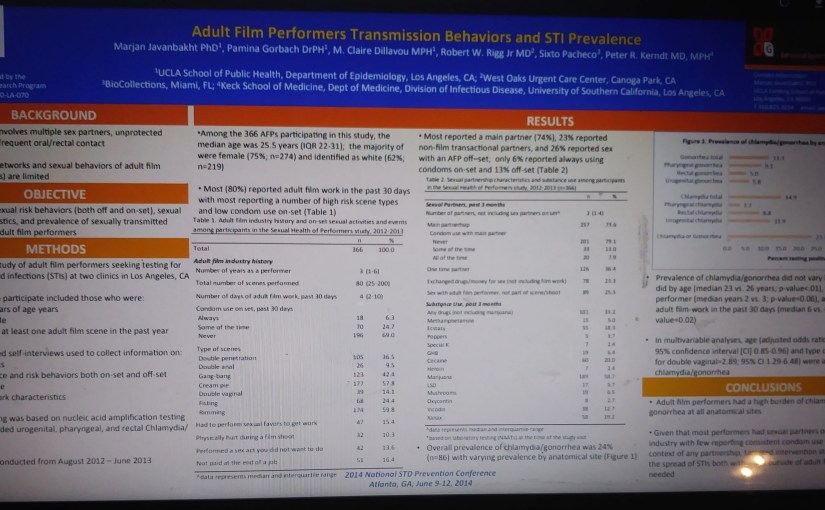

 10 Common Sense Reasons to Reject Pornography